Wooden Kitchen Ideas Rooted in Timber
A Wood Kitchen Should Get Better With Age
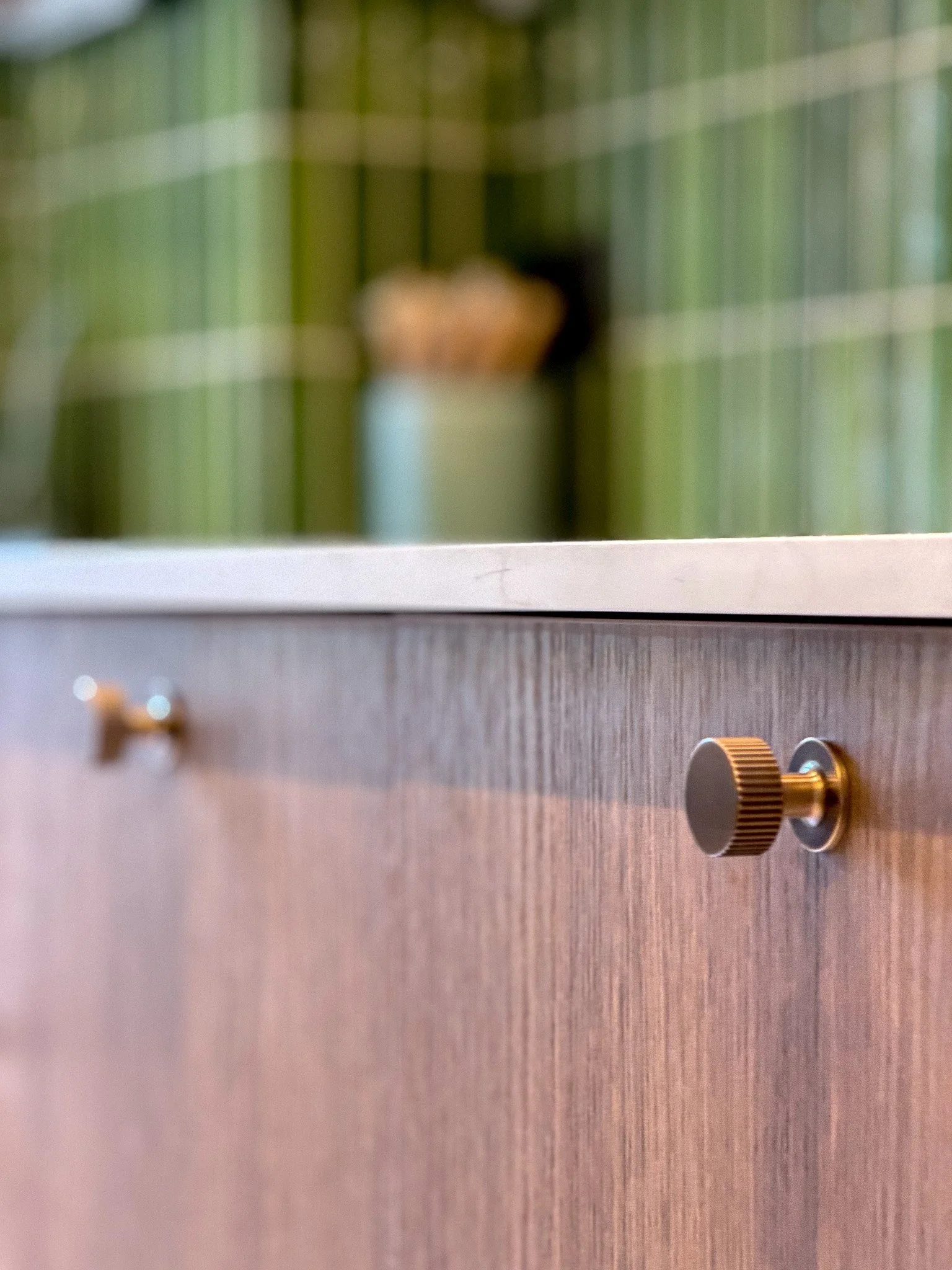
The wood kitchens worth having look better in their tenth year than on the day they were fitted. Oiled wood mellows to a deeper tone, and a scuffed wooden top can be sanded back and refinished rather than replaced. That outcome is decided long before installation, mostly by what each door is actually made of and by how the kitchen design protects the wood from the water and metal it reacts with. This guide covers each of those decisions, drawing on the British and German ranges we specify and display in our Muswell Hill showroom.
Solid timber, veneer or a wood effect kitchen
When you compare quotes for a new kitchen, ask each supplier exactly what "wood" means in their specification, because a wooden kitchen can be built in very different ways. Solid timber means the frames are cut from the tree itself: Burbidge, the Coventry maker whose range of solid wood kitchens we supply, builds those doors this way. Real wood veneer is a thin leaf of timber bonded to a stable board, and Rotpunkt, our German partner, offers veneered fronts alongside a separate collection of wood-look melamine. Even behind solid doors, the carcass of each kitchen unit is usually board, because nobody sees it and board stays square.
Those differences show up over years, not on handover day. Solid wood moves with the seasons, and it moves unevenly: The Wood Database lists European oak shrinking 8.4% along the line of its growth rings but only 4.7% across them, measured from green to oven-dry. That imbalance is why quartersawn boards, with their silvery ray fleck, hold their width better than plain-sawn ones. It is also why a painted solid frame is often paired with an engineered centre panel. Veneer on board moves far less, so wide slab doors and tall housings stay true.
A wood-look door deserves a fair hearing too. Good melamine now carries a synchronised pore texture, where the surface relief follows the printed woodgrain, and Rotpunkt even uses some of the same shade names across its veneer and melamine collections. It wipes clean easily and never needs oiling. The trade-off is repair: a chipped melamine edge is hard to mend invisibly, whereas real wood kitchen cabinets can be refinished decades later. That is the whole argument.
Light oak, dark oak and the wood tones in between
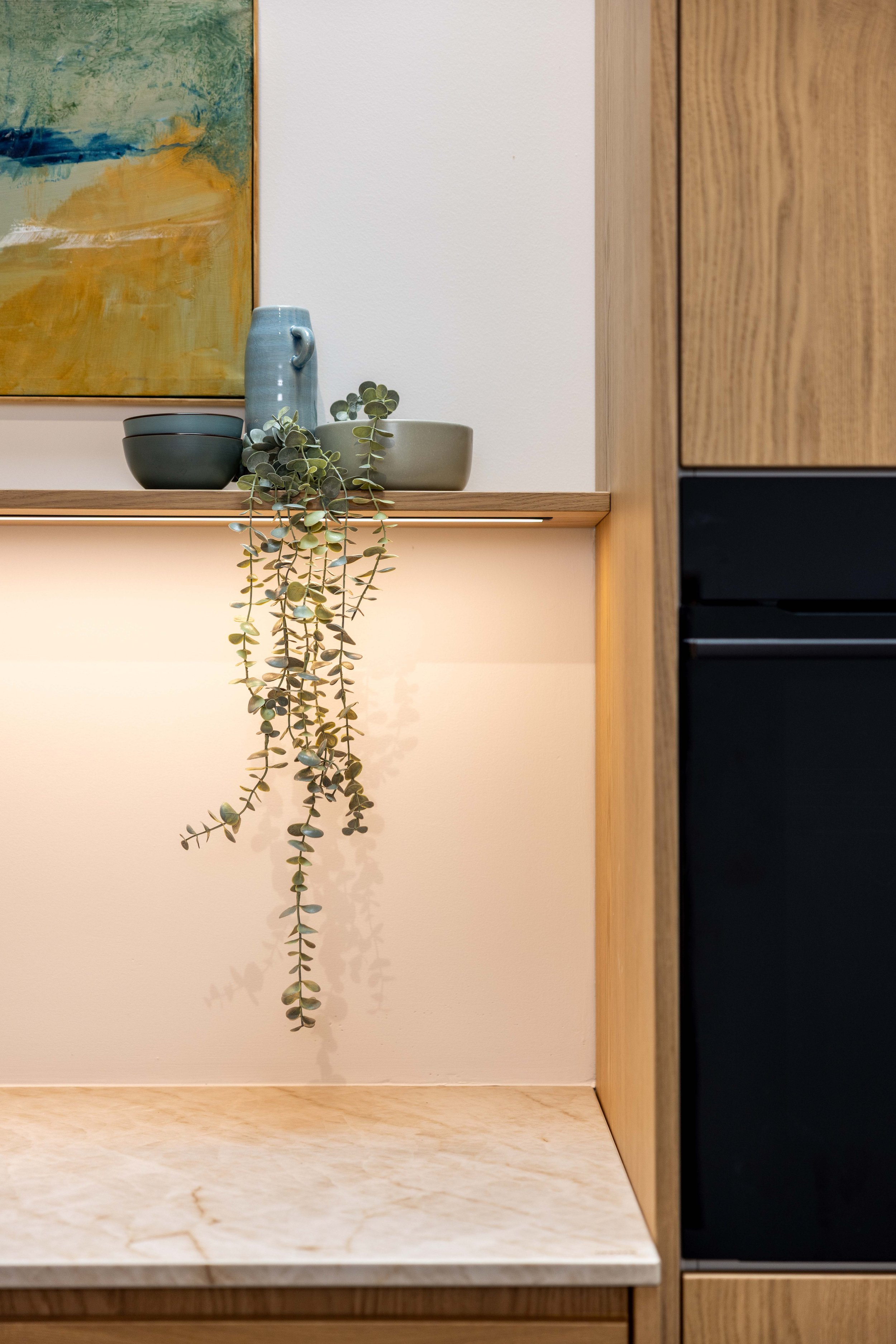
Tone changes a room more than door style does. Pale species such as ash and maple, or a limed finish, bounce natural light into the back of a long Victorian terrace, where the kitchen often sits furthest from the garden windows. A light wood kitchen also makes a small room read larger, which helps when you are trying to maximise a narrow footprint. Dark wood does the reverse. Walnut or a smoked finish soaks up light and gives a large open-plan room a warmer, more enclosed corner to cook in.
Wood also keeps changing after it is fitted. Oiled and lightly lacquered surfaces tend to mellow and deepen as they meet daylight, so natural oak cabinets will not look quite the same in five years as they did on the sample board. Kitchen inspiration images make this harder to judge, because they are usually shot in bright, even light that flatters pale finishes. See your chosen finish beside your actual floor and wall colour, and live with a sample door at home for a week if you can.
Grain pattern matters as much as tone. Crown-cut veneer shows the arched, cathedral figure most people picture, while quarter-cut and rift-cut veneer run in straight lines and give a quieter woodgrain kitchen that suits a minimal scheme. Mixing species can work, but pick tones that are clearly different rather than nearly matching. Two finishes a shade apart tend to look like a supply error, whereas a deep walnut island against pale tall units looks deliberate and will add depth to a long room.
Colour and contrast around natural wood
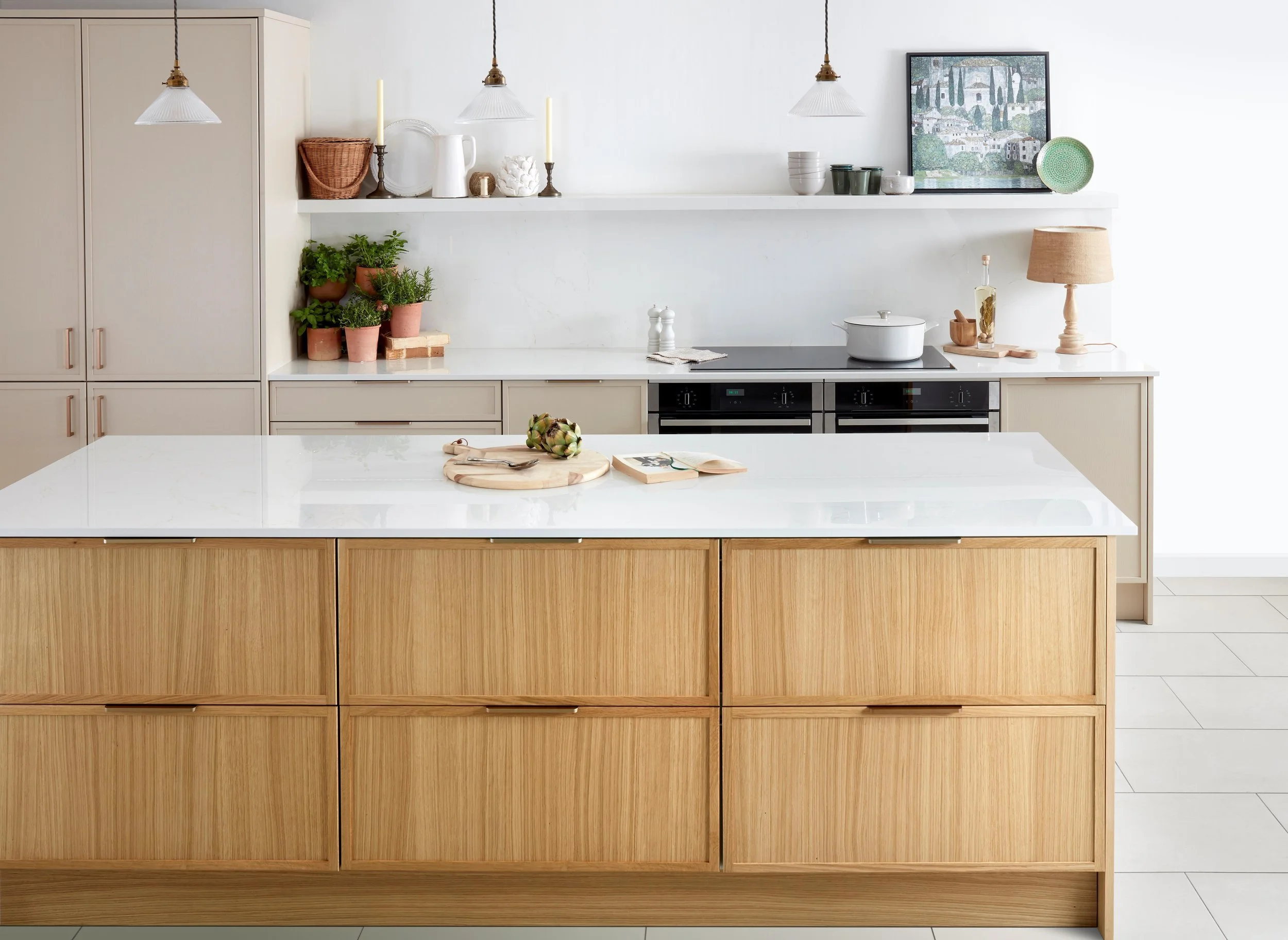
A wood kitchen rarely needs to be wood from floor to ceiling. An all-wood scheme suits a converted barn, but in a terrace or a glazed extension it can feel heavy. We generally prefer to let wood carry the island or the lower cabinets while colour takes the walls and tall units. That split puts the warmth of wood where your hands touch it, with a calmer surface at eye level.
Colour choice depends on the undertone underneath. Oak usually carries a light brown to olive cast, so it sits comfortably beside muted greens, warm whites and soft clay pinks, and tends to clash with cool blue-greys. Walnut's chocolate base takes deeper colours such as inky blue or forest green. Aim for contrast in tone rather than temperature: warm oak cabinetry under an off-white wall looks calm, while the same wood beside a stark white gloss can look orange.
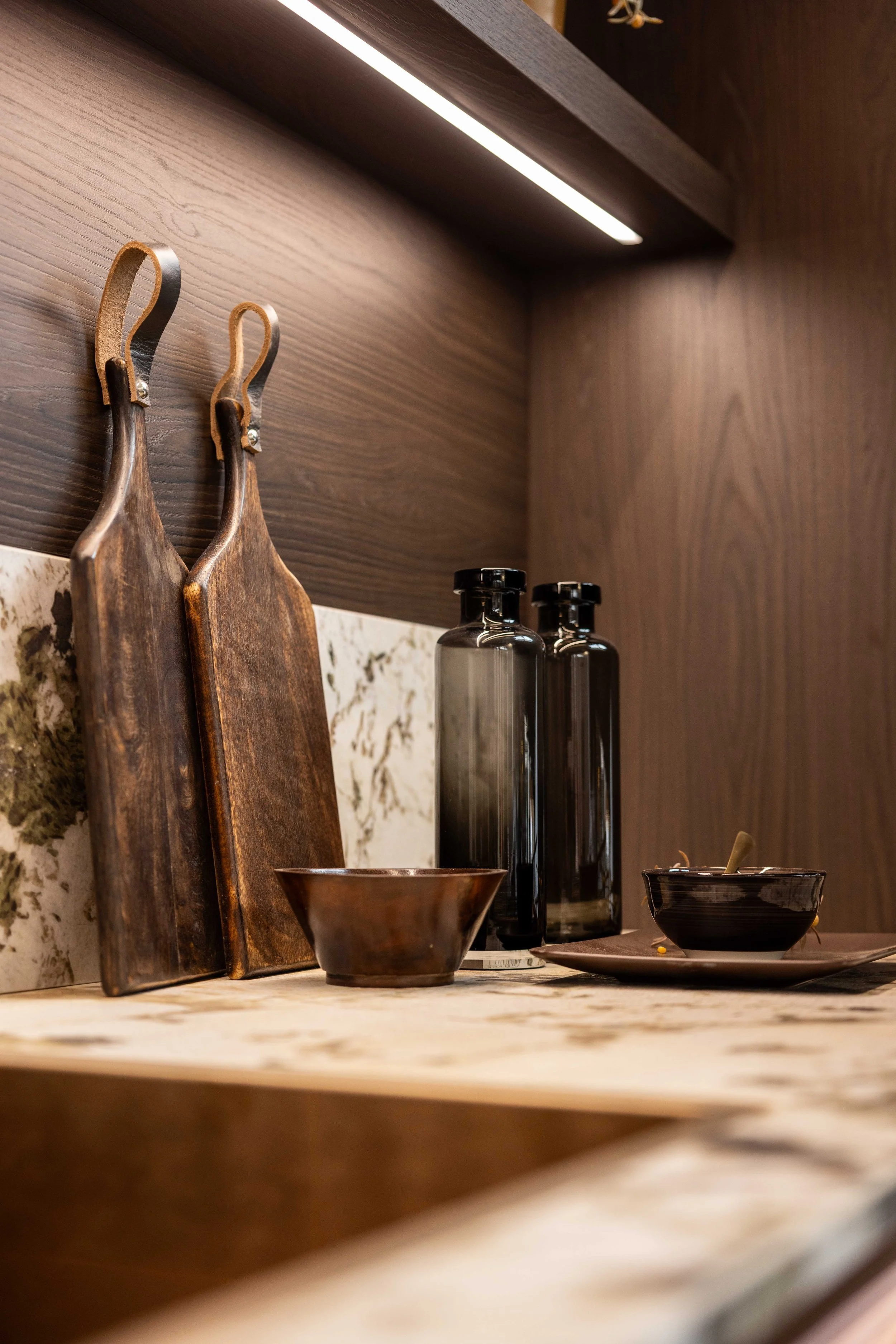
Stone finishes the scheme. A matt marble worktop set over wood is a pairing that has lasted because the cool veining offsets the grain, and together the two create an elegant room without much else in it. Marble does etch with lemon juice and wine, so it suits people who enjoy patina rather than those who want a surface that never changes. For a room that now works as the heart of the home, that restraint pays off. Fewer materials, done well.
Shaker, handleless and choosing a kitchen style
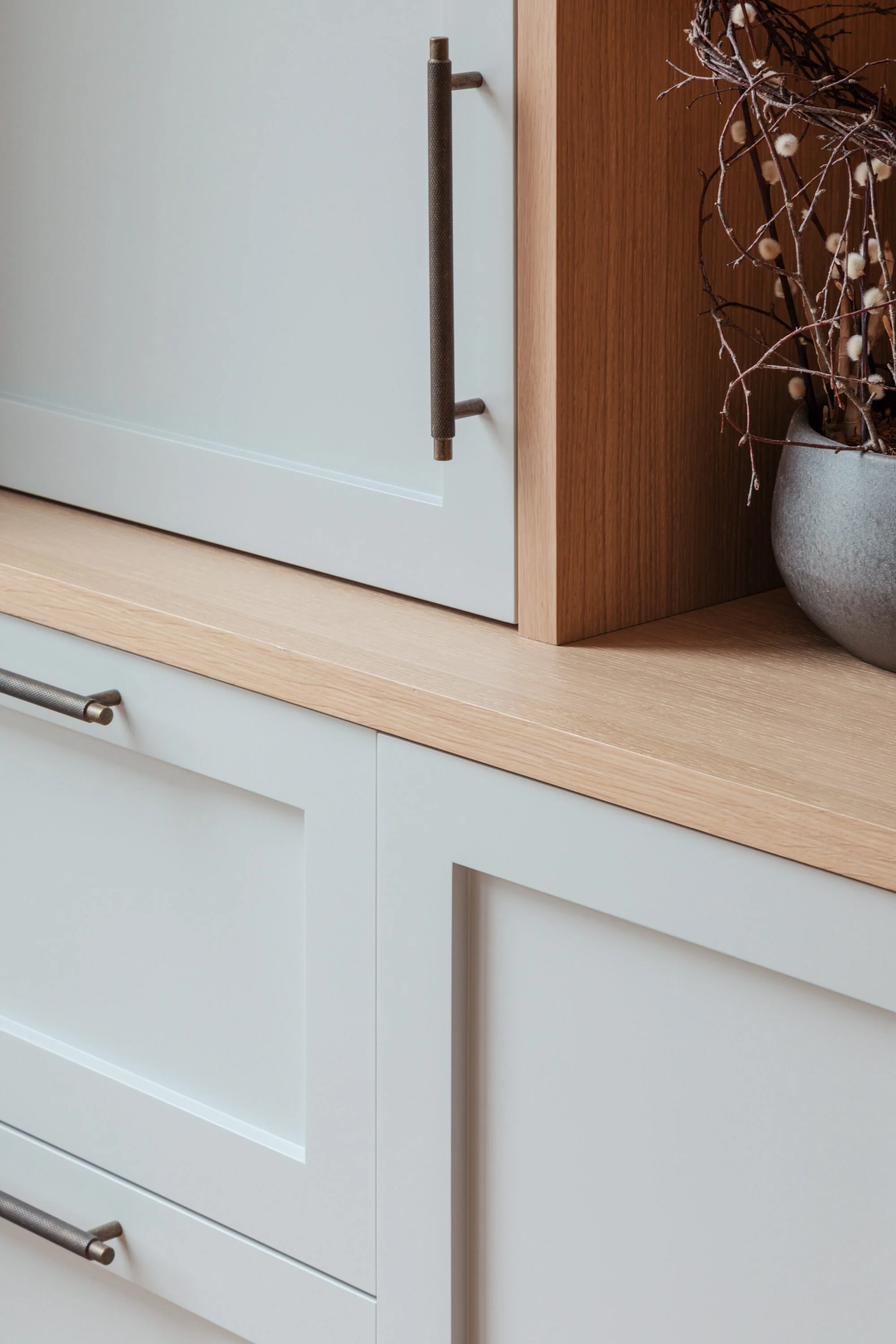
Wood works across a wide variety of styles, and the door profile decides where on that spectrum you land. Classic shaker doors in solid ash with a clear oil read as traditional; add a range cooker and a glazed dresser and you have a country kitchen. Loosen it further with open shelves and a scrubbed table in place of an island, and it becomes a farmhouse kitchen with very little else changed.
At the other end, a handleless slab in vertical-grain veneer gives a modern kitchen the warmth it often lacks. Rotpunkt's reeded fronts, with fine grooves running the length of each door, suit tall banks of housings where flat veneer can start to look like a wall of panelling. Burbidge's micro shaker kitchen is available in painted, timber and textured finishes and sits between the two: a slimmer frame for people who want detail without a period look.
Few materials bespeak care as clearly as a well-jointed timber door, but the door still has to suit the house. Kitchen trends move quickly, and a fluted kitchen door that feels current now may date faster than a plain one. We would rather pick a kitchen style that follows the architecture and let handles, lighting and colour carry the fashion. Cabinet doors are also the part of the budget you look at every day, so a few samples held against your own walls will tell you more than any brochure. Samples settle it quickly
Worktops, the island and where timber needs protecting
Wood is at its most rewarding on worktops and at its most demanding next to the sink. Oak is rich in tannins, and when a wet cast-iron pan or steel scourer is left on it, the tannins react with the iron and leave a blue-black mark. Ideal Home's stain advice puts the fix plainly: water is the catalyst, so wipe spills straight away and stand pans on trivets or boards.
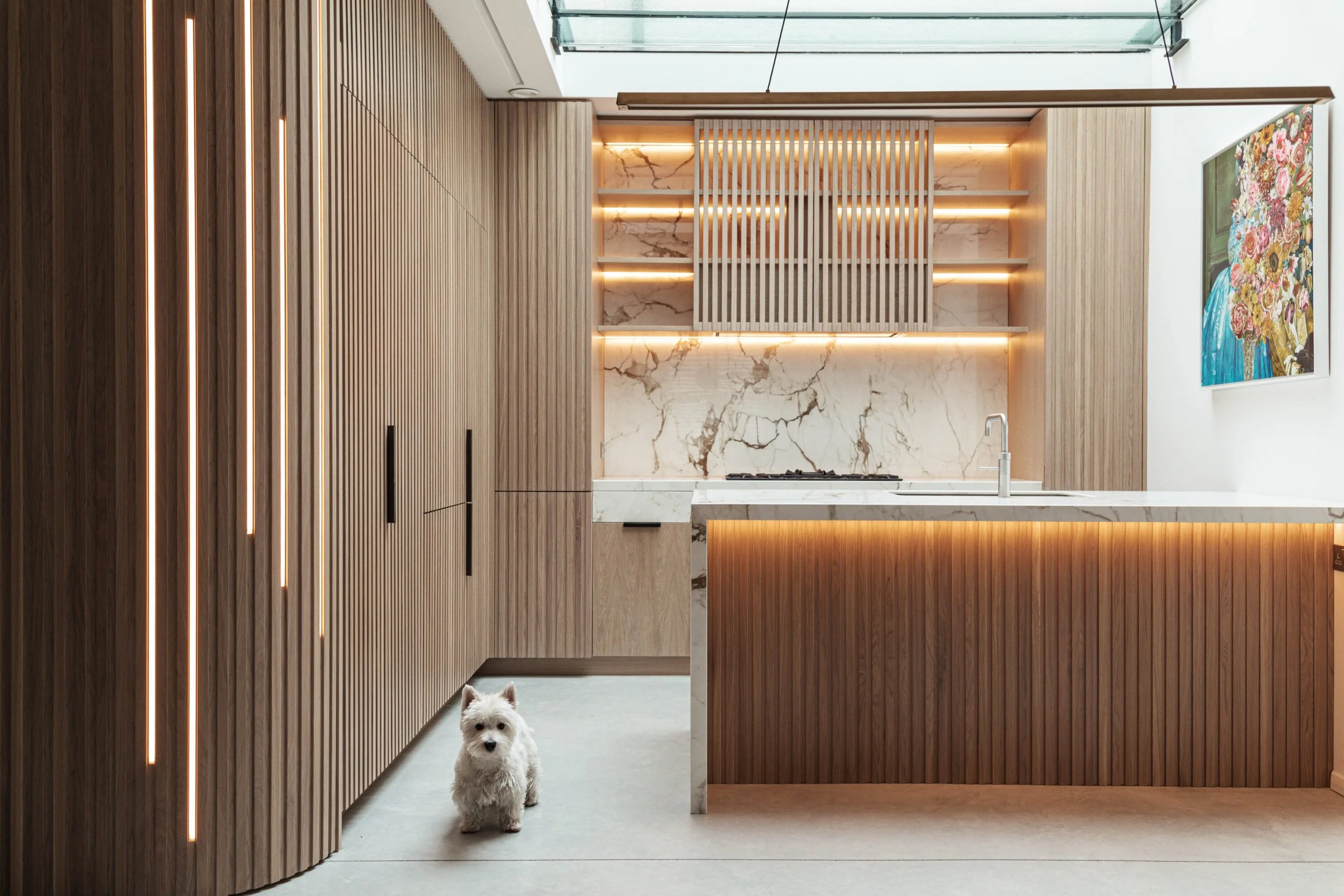
That is why the layout matters as much as the material. We think wood belongs away from the sink run, with stone or composite around the wet zone and a wood top saved for a kitchen island or breakfast bar where nothing sits in water. A wooden island with an oiled top also forgives knocks from bar stools and homework, because a dent in solid wood can often be lifted with steam or sanded out.
Oil and lacquer behave differently here. Lacquer resists water better on day one, but once it is scratched through, moisture gets underneath and the repair usually means refinishing the whole top. Oil asks for regular re-oiling, especially in the first year, and in return a mark can be sanded and patched locally. Neither is wrong. It depends on how you cook.
Where the wood in your kitchen comes from
A solid oak kitchen uses a lot of wood, so it is fair to ask where that wood grew. Under the UK Timber Regulations, which have applied in Great Britain since January 2021, illegally harvested timber cannot be placed on the GB market, and the rules cover composite products such as furniture as well as raw boards. Government guidance explains that the business first placing timber on the market must gather information on its species, supplier and country of harvest, then assess and reduce the risk that it is illegal. Traders further down the chain keep records of who they bought from and who they sold to.
Legality is the minimum, though. The more useful question is how each of the kitchen ranges you are considering uses its wood. Burbidge kitchens are made in the UK, and Rotpunkt offers front boards made with up to 90% recycled wood for people who want the look with a smaller call on newly felled trees. A solid wooden door is not automatically the greener choice, and an engineered one is not automatically worse.
How our design service works
Wood rewards planning more than most materials, which is why we treat it as a specification question before a style one. Every fitted kitchen we design starts with an initial consultation, then a design phase that typically runs two to three weeks and covers layout planning and detailed specifications for each door, panel and worktop. Your project is fully drawn and specified before anything reaches site. That saves guesswork later. Expert design matters most here: deciding which runs get real wood and where the sink sits relative to it.
You can see Burbidge's solid doors and Rotpunkt's veneers side by side in our showroom, along with door styles and paint finishes, which makes tone and grain far easier to judge than on a screen. Bring the kitchen design ideas you have saved, however rough. An expert kitchen designer should also ask how you cook and who uses the room, because finding the right kitchen for your home depends as much on that as on any finish. There is no perfect kitchen in the abstract, only one that suits the way you live.
Once the design is signed off, we coordinate the kitchen installation with approved installers through to handover. Our sister company, North Arch Bathrooms, was named Installation Company of the Year at the kbbreview Retail & Design Awards 2026, and the same planning-first approach shapes how our kitchen projects run. If you are weighing up solid timber, veneer or a mix for your dream kitchen, a kitchen planned this carefully should still feel right at the heart of your home in fifteen years. When you are ready to create your dream space, visit our showroom or book a consultation and start with a design conversation.