Traditional Kitchen Designers
Classic English Shaker Kitchens With Timeless Style
Traditional kitchen designers shape a kitchen that feels settled, practical and personal. This guide shows how a traditional kitchen, from a classic shaker kitchen to a more country style room, should balance proportion, materials, storage and day to day use.
A good traditional kitchen starts with layout, not decoration.
Shaker and classic English detailing give the room order without making it feel fussy.
Natural materials, timber, colour and well-chosen worktops create timeless appeal.
Proper storage solutions matter as much as appearance, especially in smaller kitchens.
The best traditional kitchen designers combine traditional and modern needs in one clear plan.
A well-run project depends on expert designers, clear scope and one accountable team.
Traditional Kitchen Designers Start With Layout, Not Decoration
A well-planned kitchen begins with how the room is used, not with a door sample. We always look first at movement, sightlines and the kitchen space itself: where food is prepared, where the main appliance sits, how people gather, and whether a kitchen island will improve flow or simply fill the room. That approach matters whether the brief is an English kitchen for a period house or a new kitchen for a rear extension. Traditional kitchens are designed to feel composed, but that only happens when the plan is right.
The strongest kitchen design is often quiet rather than showy. A kitchen that’s easy to cook in, easy to clean and easy to share tends to outlast trend-led decisions. That is why traditional kitchen designers often favour a layout with clear zones, generous landing space near each appliance, and cabinet runs that make the most of awkward corners. Good traditional design also respects the architecture of the home, so the kitchen feels like part of the interior rather than a separate fit-out.
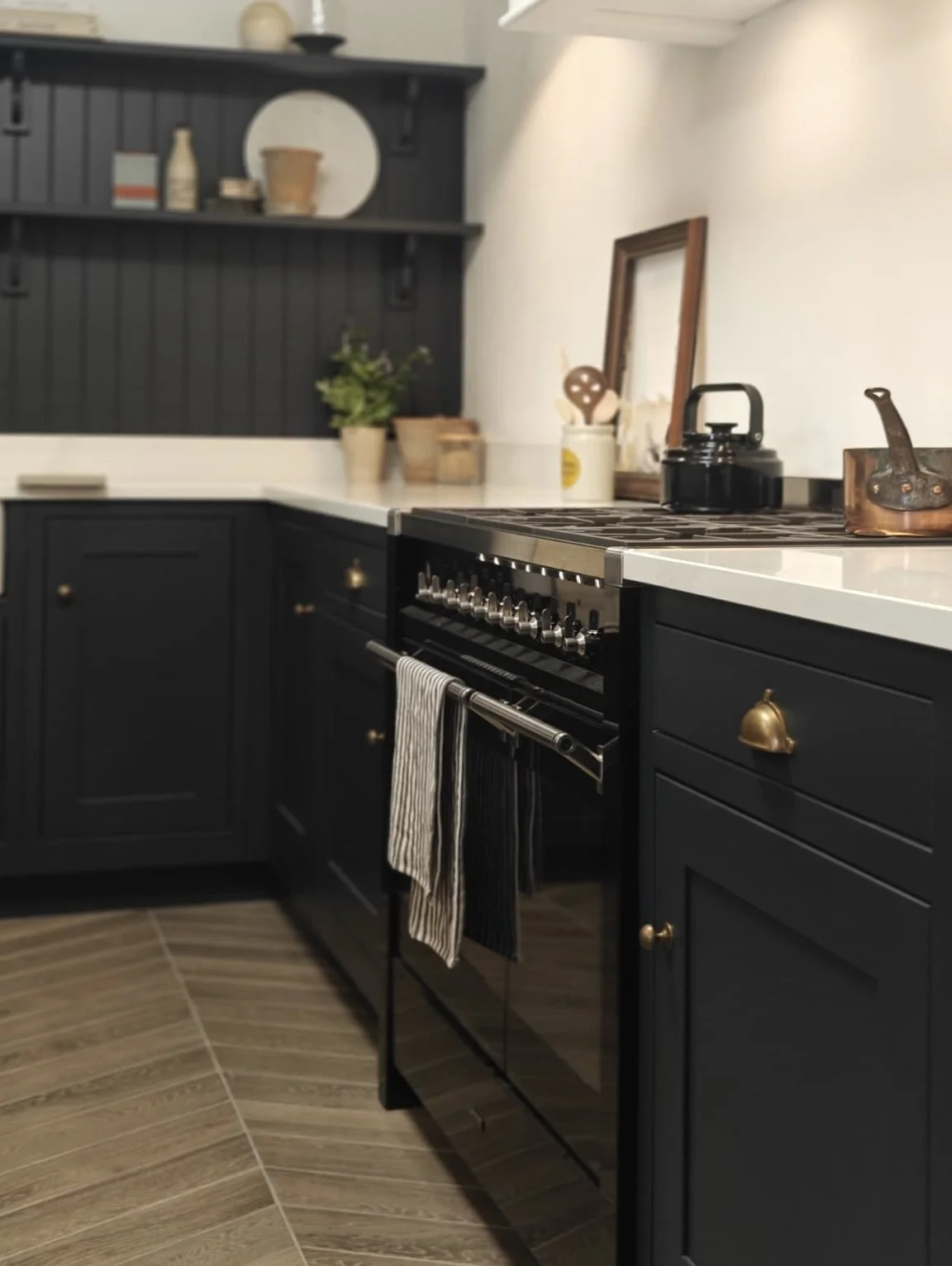
Shaker remains one of the most reliable ways to give a traditional kitchen its shape. A shaker kitchen can feel pared back, while a classic shaker kitchen can carry more depth through beadwork, moulding or a bevelled frame. The point is not to pile on decoration. The point is to give the cabinet face, cupboard doors and visible joinery enough character to read as crafted, simple yet elegant and built for daily use.
A classic shaker approach also suits more than one kitchen style. It can lean toward a country kitchen with open shelving and wooden cabinets, or move closer to a classic kitchen design with painted fronts, a framed mantel and a quieter palette. That flexibility is why shaker remains central to the world of traditional rooms.
A traditional style kitchen should also feel edited. One bevelled edge, one well-detailed cupboard, or a framed run of traditional kitchen cabinets will often do more than several decorative features fighting for attention. We prefer a classic shaker cabinet because it gives a traditional look and feel without pushing the room into pastiche.
Shaker Details Give A Traditional Kitchen Its Quiet Structure
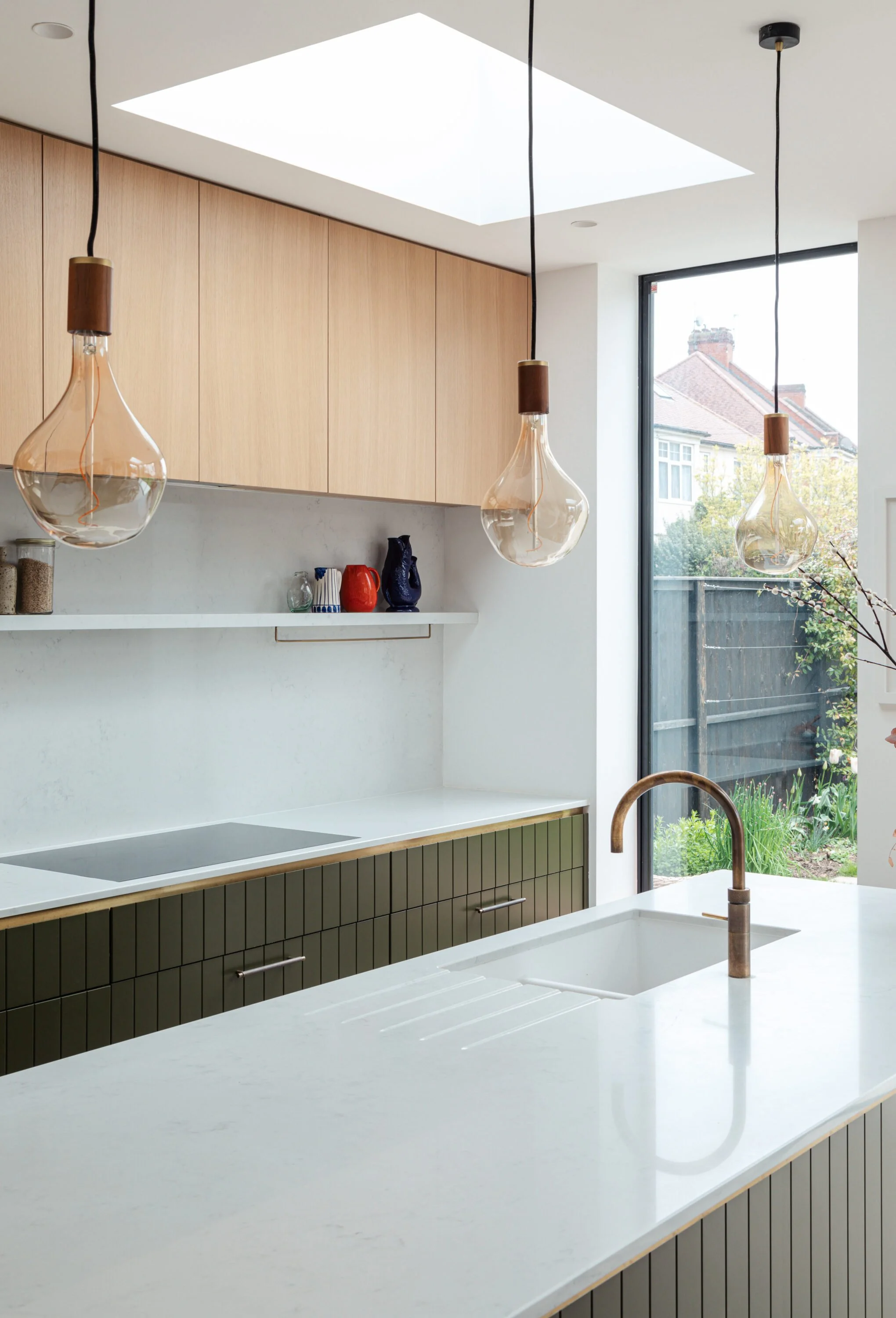
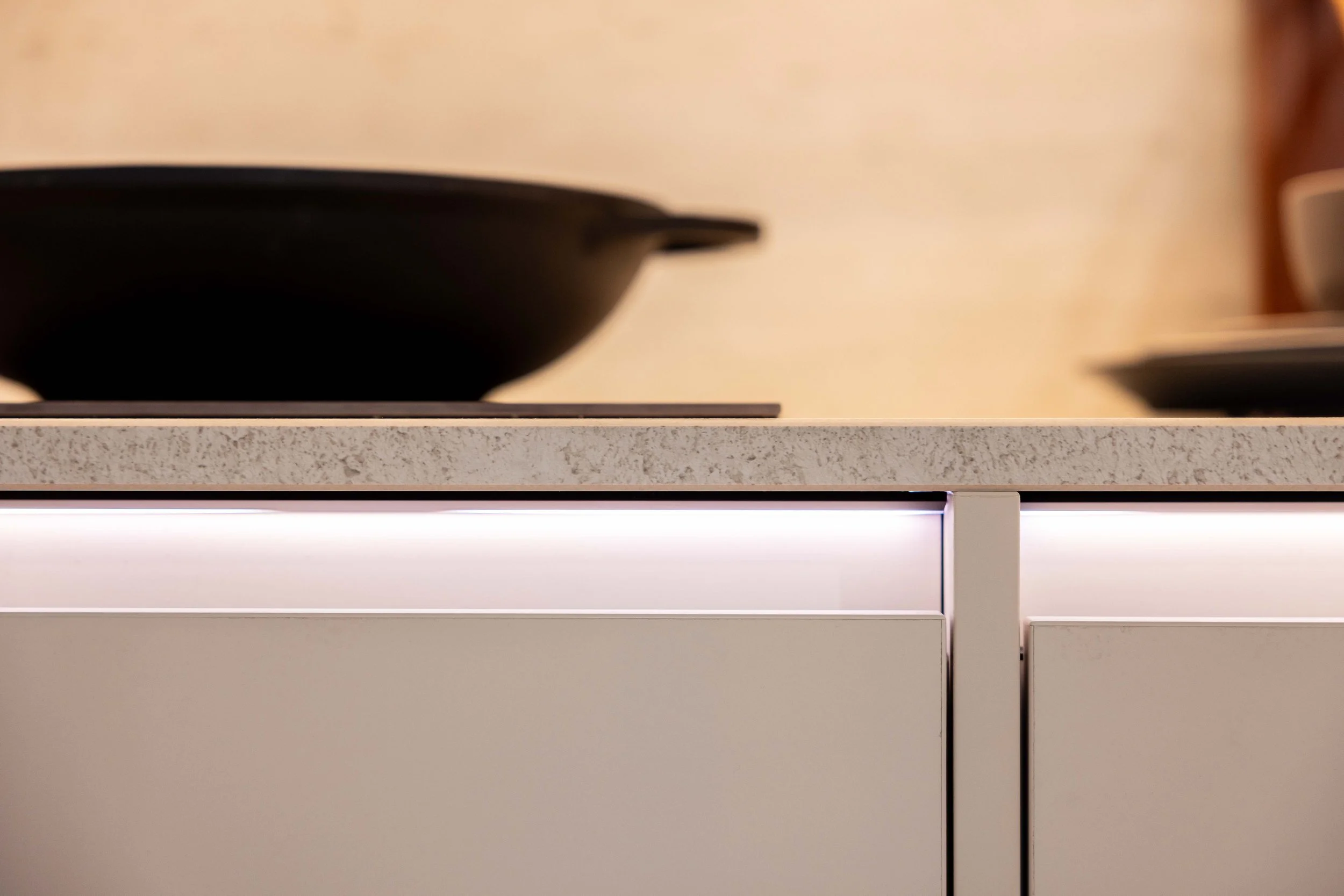
Materials And Colour Choices Shape A Timeless Traditional Style Kitchen
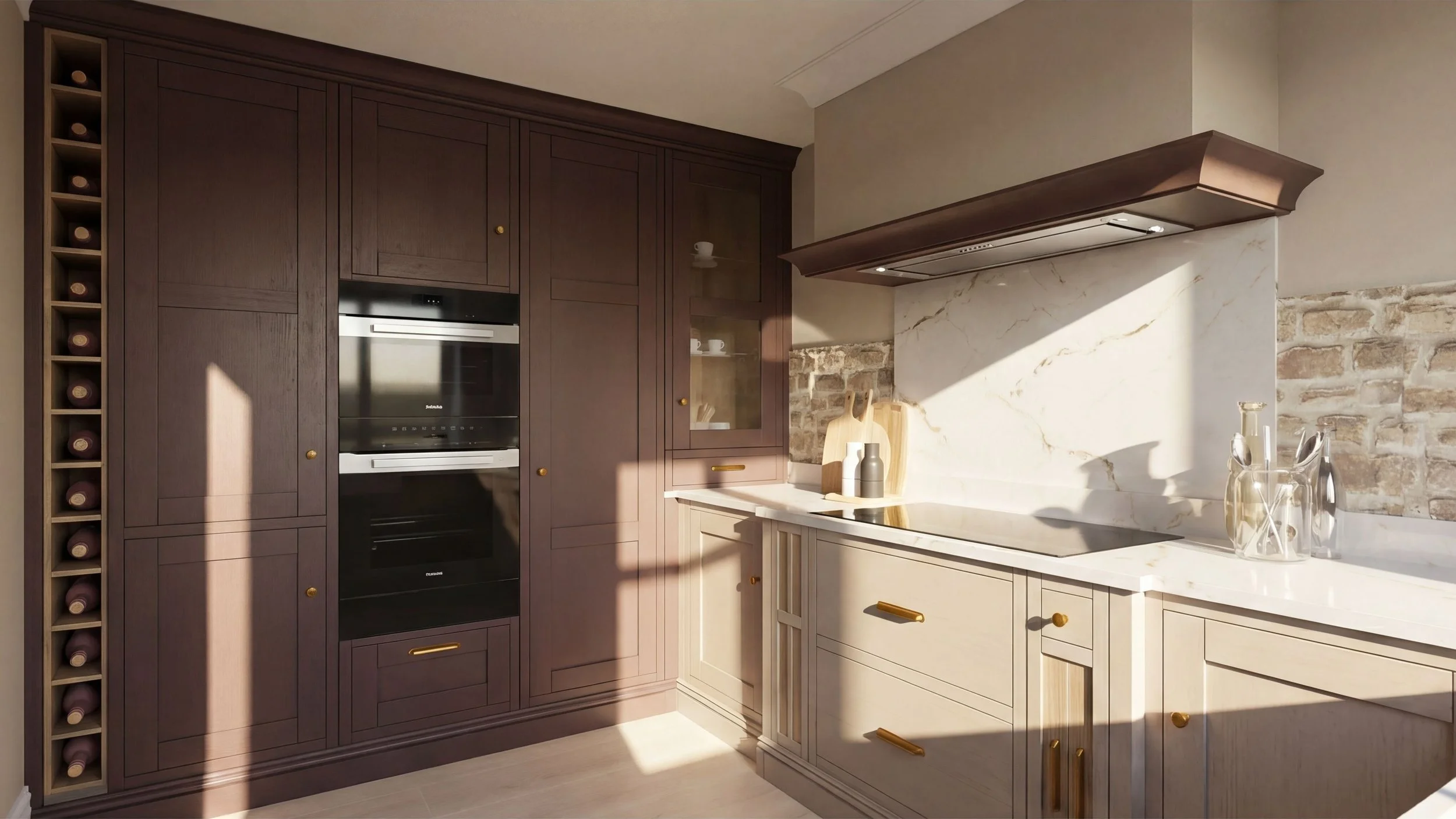
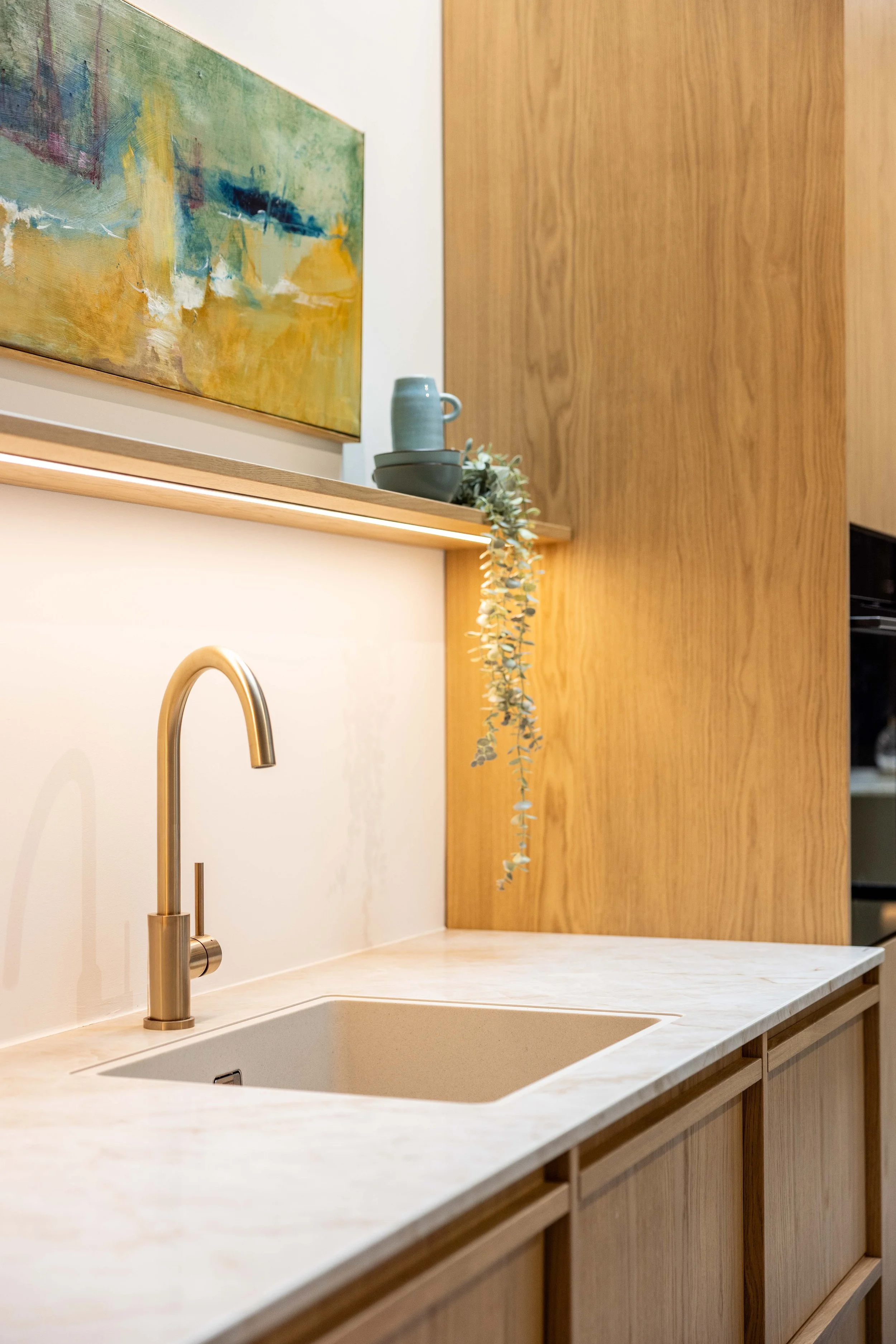
Materials carry much of the emotional weight in a traditional kitchen. Timber, stone and other natural materials bring warmth that flat laminates rarely match, and the use of natural materials helps the room settle into the house over time. Solid ash can work beautifully for painted doors, while wrapped MDF may suit selected budget-sensitive areas, and worktops in quartzite, marble or richly textured composite can give a durable finish without losing the classic charm many clients want. A single worktop choice can influence whether the room reads as a country-style space or a more formal classic English scheme.
Colour matters just as much. Shades of cream, soft grey-green, blue-black and earthy neutrals can all support a traditional style, but the best colour is one that relates to the light and architecture of the home. A frame painted kitchen can look refined in a tall period room, while smaller kitchens may benefit from a lighter colour across the kitchen units and cupboard doors to keep the room open. Timeless designs rarely rely on novelty. They use a measured palette that supports the cabinetry, splashback and worktops rather than trying to dominate them. That restraint is one reason traditional interiors age so well.
Modern designers connect traditional kitchen design with natural timber, painted cupboard doors and an overall timeless feel. We agree with that direction, but we would add one caveat: materials must earn their place through performance as well as appearance. A beautiful kitchen furniture finish is not enough if it marks too easily or if the worktops do not suit the way the household cooks.
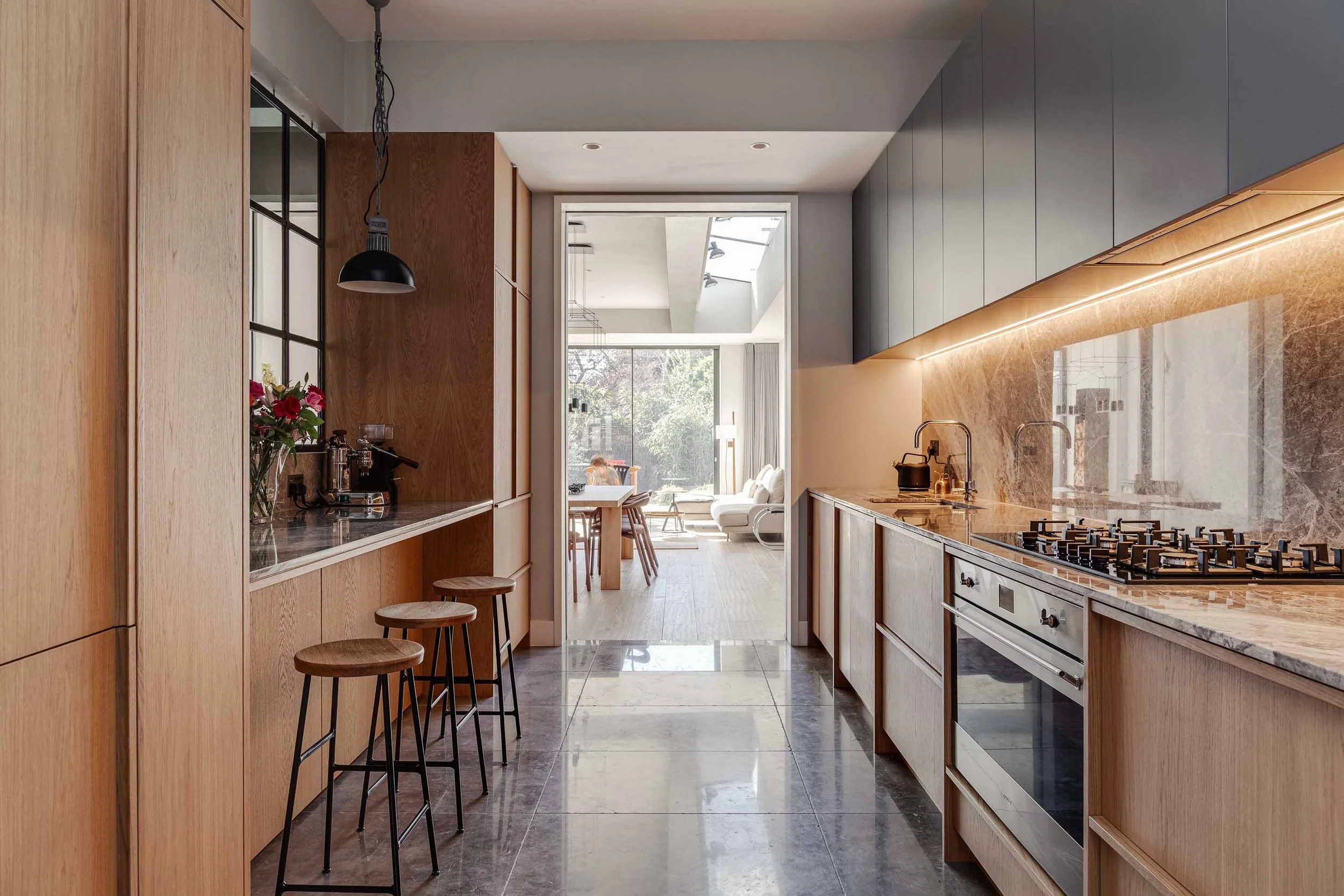
Storage And Joinery Make Daily Use Easier
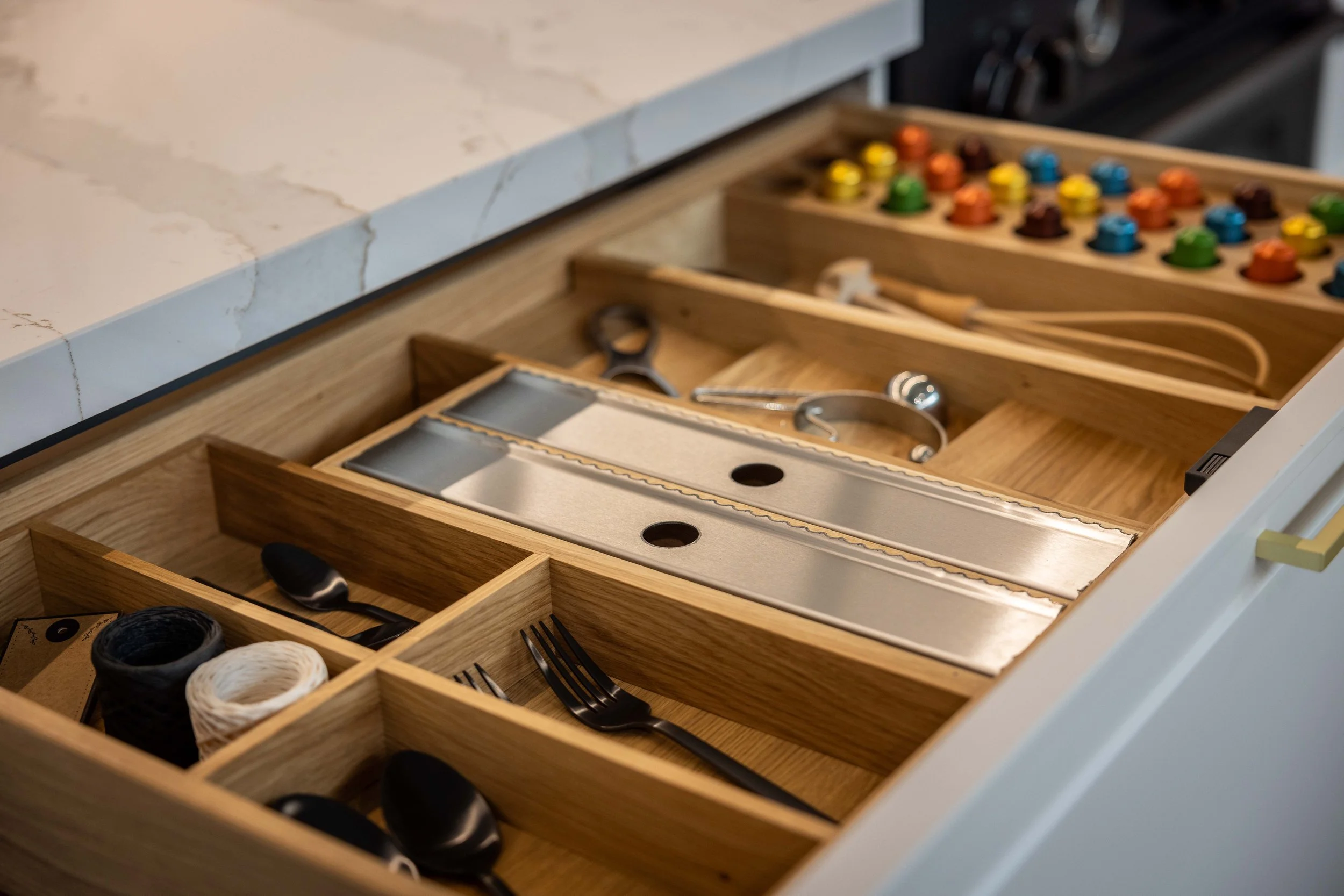
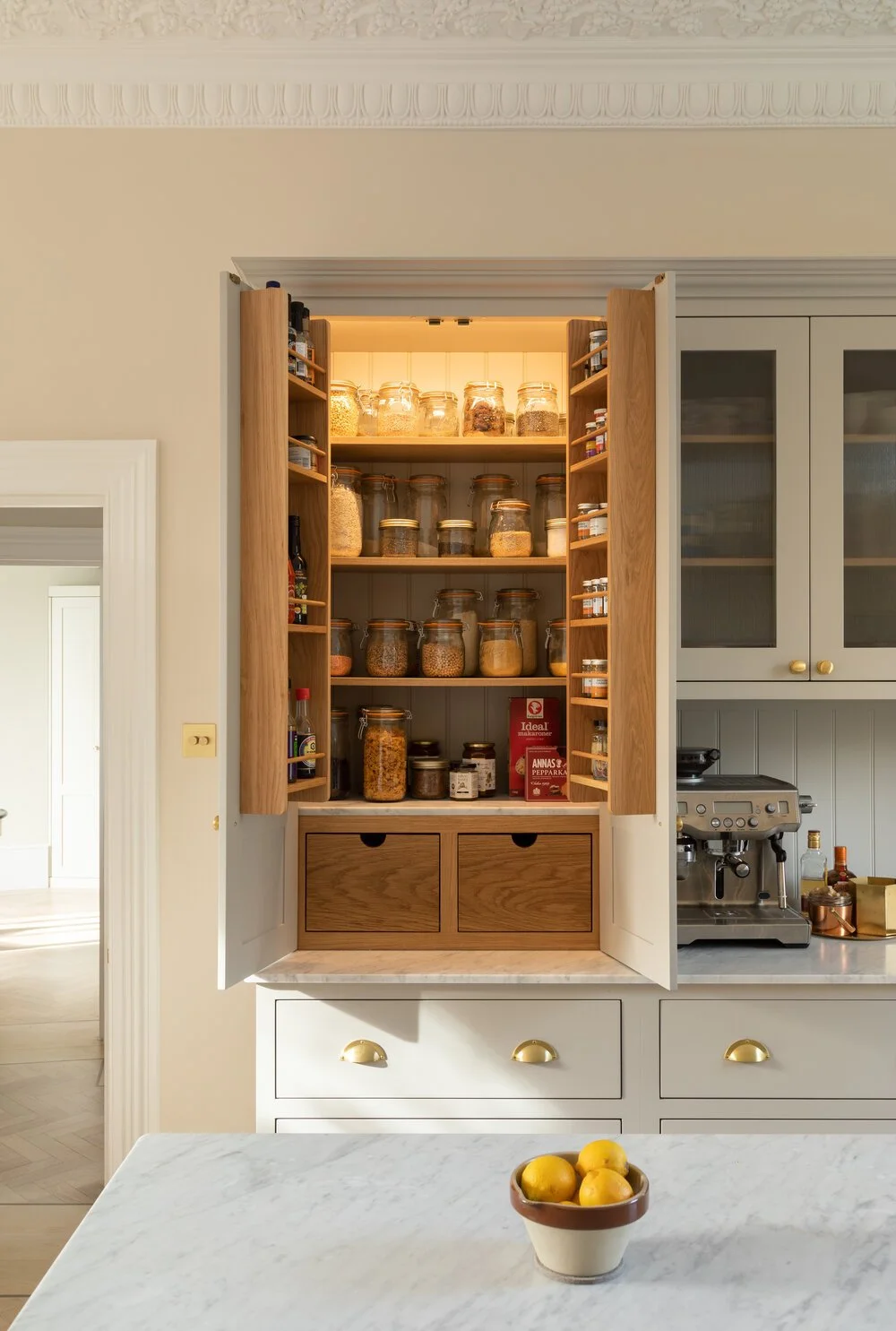
Storage is where many beautiful rooms succeed or fail. Traditional kitchen units need to do more than line the walls. They need clever storage, accessible preparation zones and cabinetry that supports daily routines. We often advise clients to think about breakfast items, bins, cleaning products, tall pantry storage, kitchen accessories and serving pieces before choosing any finish. That simple exercise turns broad traditional kitchen ideas into a practical brief.
Traditional kitchen designers should also know when to hide things and when to display them. Cabinets with or without glass, open shelving, a dresser-style run or a well-placed cupboard can all work, but each choice changes the feel of the room. Too much display can make the kitchen harder to maintain. Too much concealment can remove the warmth people want from a traditional kitchen. Proper joinery solves that tension by giving each item a home and by using traditional kitchen units where they make sense, rather than forcing symmetry at all costs.
This is also where traditional and modern priorities meet. A handleless tall bank may suit a back run even in an otherwise classic room, while a modern kitchen utility area can sit behind more traditional doors in the main space. The best features of traditional joinery still need to support access, cleaning and daily use. Modern elements and modern appliances do not need to disrupt the traditional look. Used carefully, they improve style and functionality and help the kitchen stand the test of time.
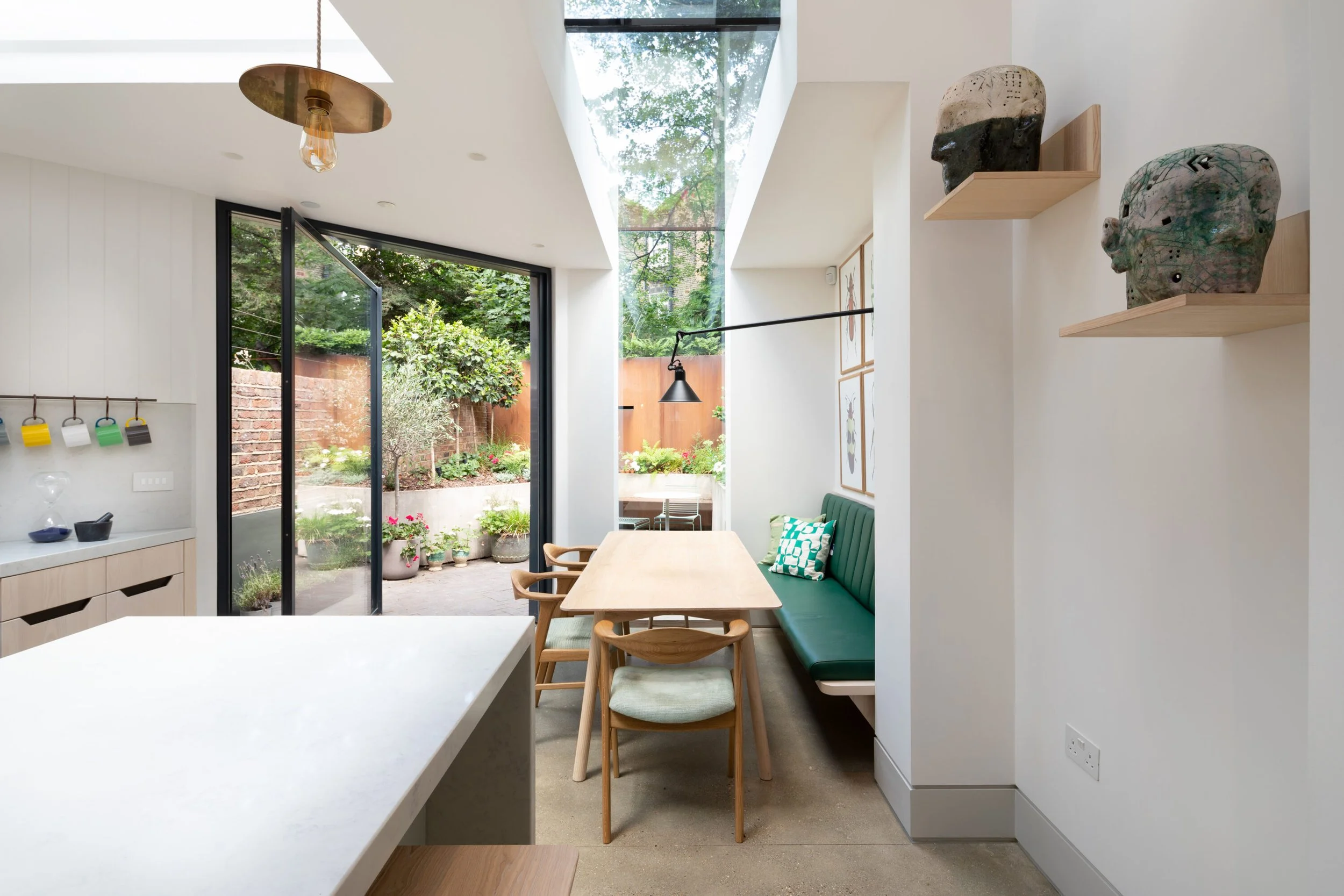
Traditional Kitchens Work Beautifully With Modern Living
A traditional kitchen should not feel stuck in one era. We see the best results when traditional kitchen designers treat heritage references as a framework, not a costume. That might mean pairing classic design elements with discreet lighting, a quieter extractor solution, or a bank of kitchen units that hides a refrigeration wall. Kitchens come to life when the planning reflects how families live now, not how they cooked decades ago.
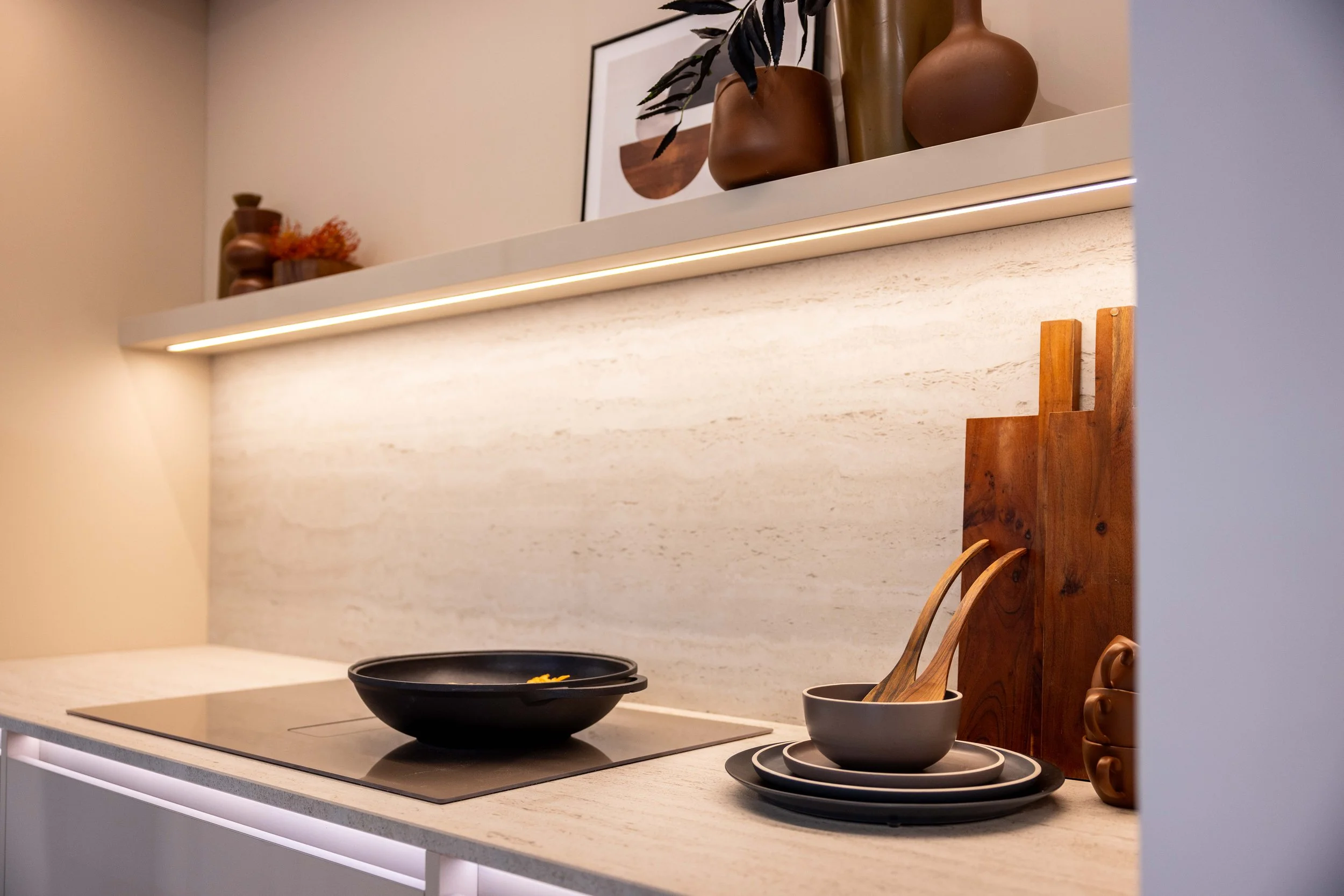
That balance is especially important when clients compare a traditional kitchen with a modern kitchen. Minimalist design can feel calm, but it can also feel cold in the wrong setting. Handled well, traditional kitchens allow more texture and personality without losing order. A traditional style room usually offers more texture, more depth and a warmer tone through timber, cupboard doors, and layered finishes. A range of traditional kitchens can also absorb modern elements more easily than people expect, from an induction hob to integrated charging points, because the room already has visual richness.
A dream kitchen is usually one that looks settled on day one and still feels right years later. That is the timeless appeal of a well-planned traditional look. We create a kitchen by shaping proportion first, then by choosing materials, storage and detailing that support daily life. That is how bespoke kitchens avoid becoming over-designed showpieces.
Social Proof And Case Study Patterns Show What Clients Value
Our proof is based on verified customer testimonials plus before-and-after project descriptions rather than anonymous reviews or exaggerated claims. That matters because homeowners choosing traditional kitchen designers usually want reassurance on process, accountability and finish quality, not empty promises.
One recurring case study pattern comes from busy families renovating or extending in North London. Those projects often begin with too many choices, conflicting advice and concern about cost drift. They usually move forward once we reduce the range of design options, set a clear layout, and coordinate suppliers and trades through one accountable process. That is where a kitchen starts to feel manageable again, and where the dream kitchen to life stage becomes realistic rather than vague.
A second pattern appears when clients have had a poor renovation experience elsewhere. They are often wary of being sold to rather than advised, and they want expert designers who can bring order to specification, installation and communication. Our fully managed model is built around that need: initial consultation, kitchen design and layout planning, supplier coordination, detailed specifications, project management and final handover. We work from our Muswell Hill showroom and focus on homeowners who value a clear process as much as the finished kitchen.
Choosing Traditional Kitchen Designers Requires Clear Process And Honest Pricing
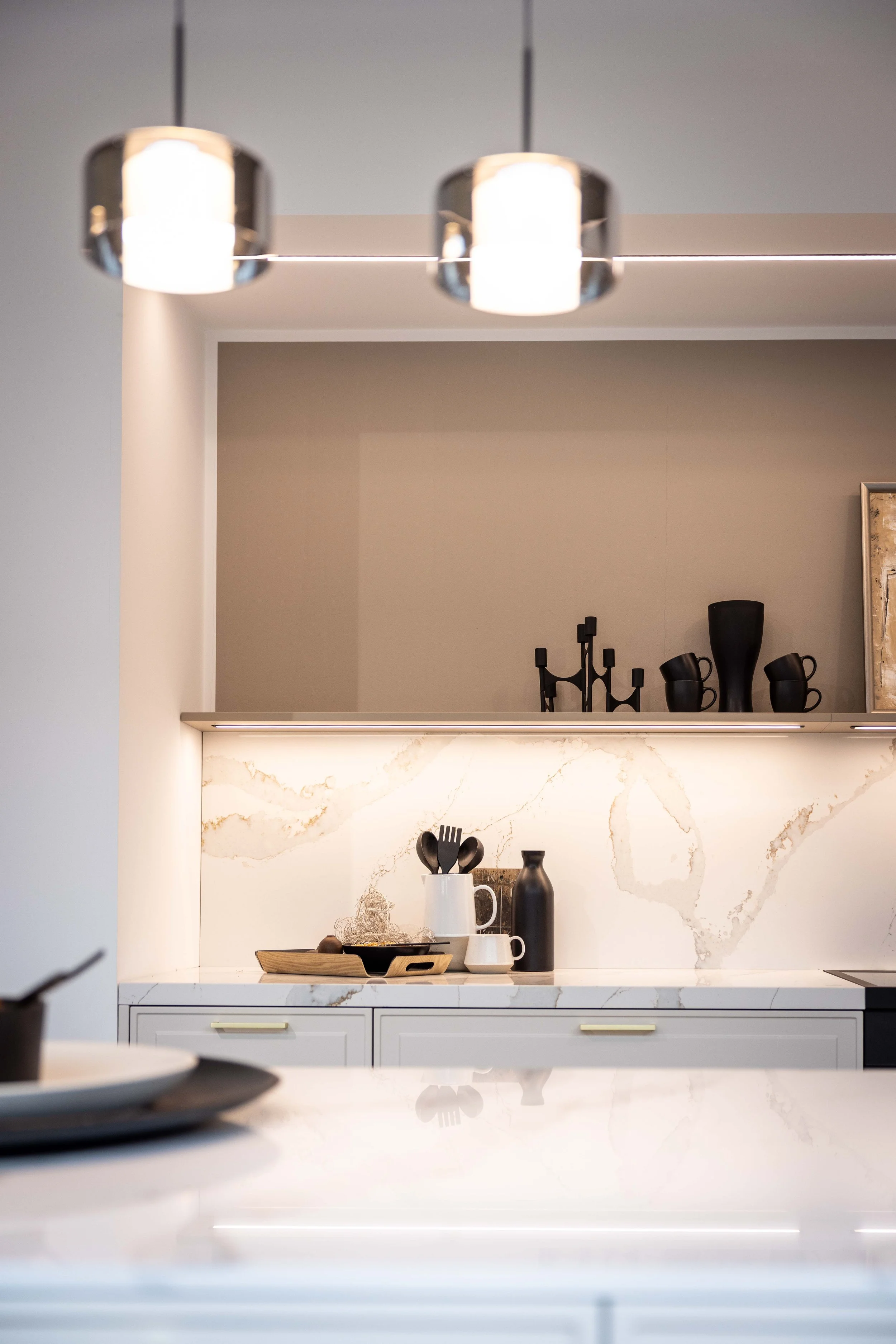
Buying a new kitchen is easier when the process is clear from the start. A design appointment should cover the brief, layout priorities, appliance list, worktops, storage, material choices and any building constraints around the room. We do not offer supply-only kitchens because accountability matters, and we do not give fixed pricing without a full design and specification. That protects the project and helps clients compare like with like.
Pricing should also be discussed honestly. Small kitchens start from £20,000, medium kitchens from £35,000 and larger projects from £50,000, with cost shaped by door range, appliance spec, worktop choice, accessories and installation scope. Trade prices on a brochure page rarely tell the full story, particularly once joinery detail, worktops and kitchen ranges are considered. A careful traditional kitchen design should be costed against the actual room, not a headline number.
Timelines benefit from the same clarity. Our typical design phase runs for 2 to 3 weeks, pre-install preparation commonly takes 4 to 8 weeks depending on scope, and kitchen installation is often 1 to 2 weeks, though every project varies. Those timings matter because a traditional kitchen often includes more detailed cabinetry, more considered material choices and a wider range of design decisions than a quick supply-led purchase.
Visit Our Showroom To Plan A Traditional Kitchen That Fits Your Home
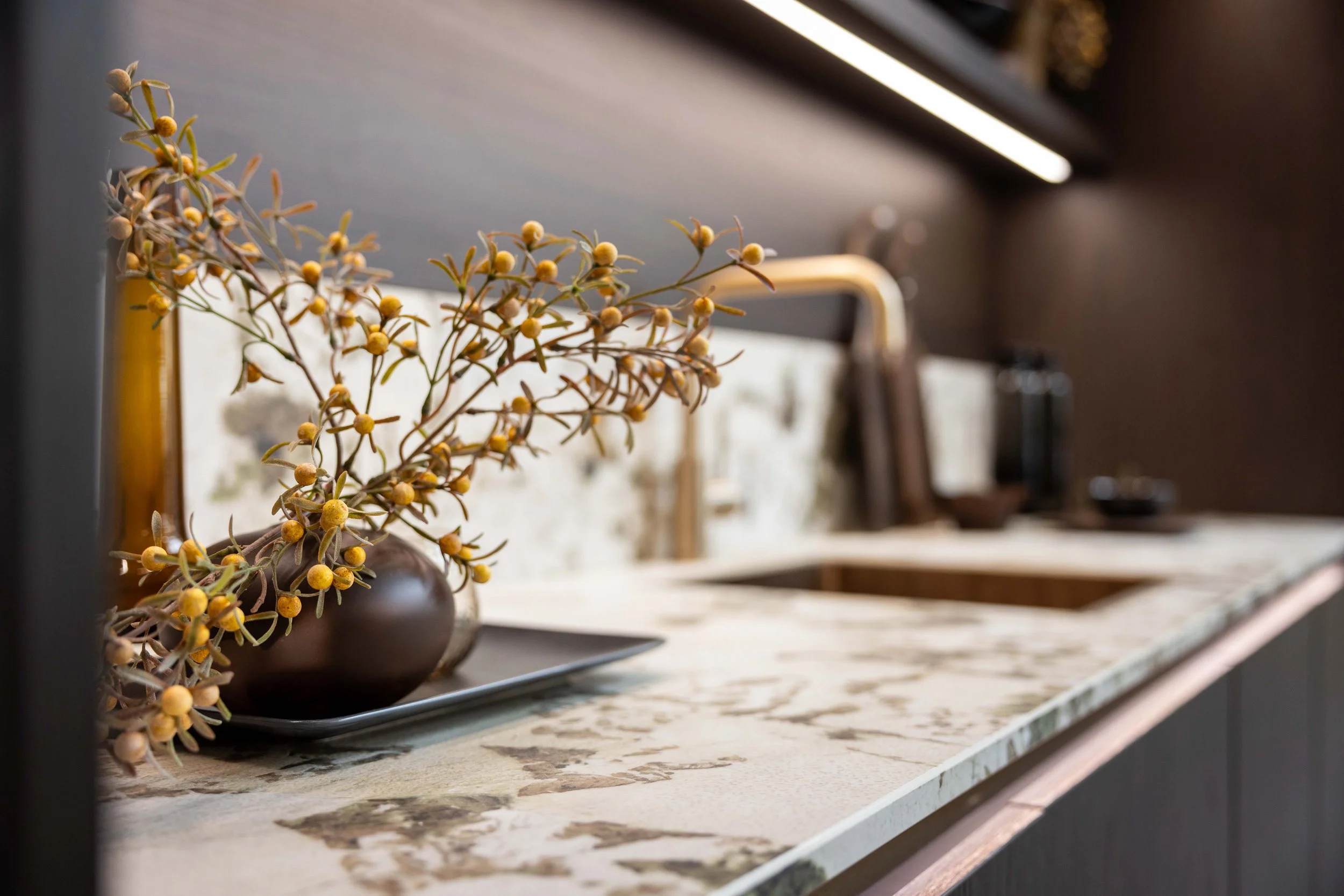
The best traditional kitchen designers do more than assemble cupboard doors, cabinet handles and sample boards. We help clients create a kitchen with lasting proportion, practical storage and a traditional look that suits the architecture of the house. Whether you are drawn to a classic shaker kitchen, a softer country kitchen feel, or a traditional style kitchen with a few modern notes, the aim stays the same: a warm and inviting kitchen with timeless appeal.
Read the room before you read the brochure. Focus on layout before decoration. Choose natural materials and worktops that suit the way you live. Ask how the kitchen units, cupboard doors, storage solutions and modern appliances will work together day after day. Then choose traditional kitchen designers who can manage the whole process, not just sell the frontages. North Arch Kitchens offers a fully managed, design-led service from our showroom in Muswell Hill for homeowners across North and North West London. When you are ready to bring your dream kitchen into focus, start with a design conversation or visit our showroom.