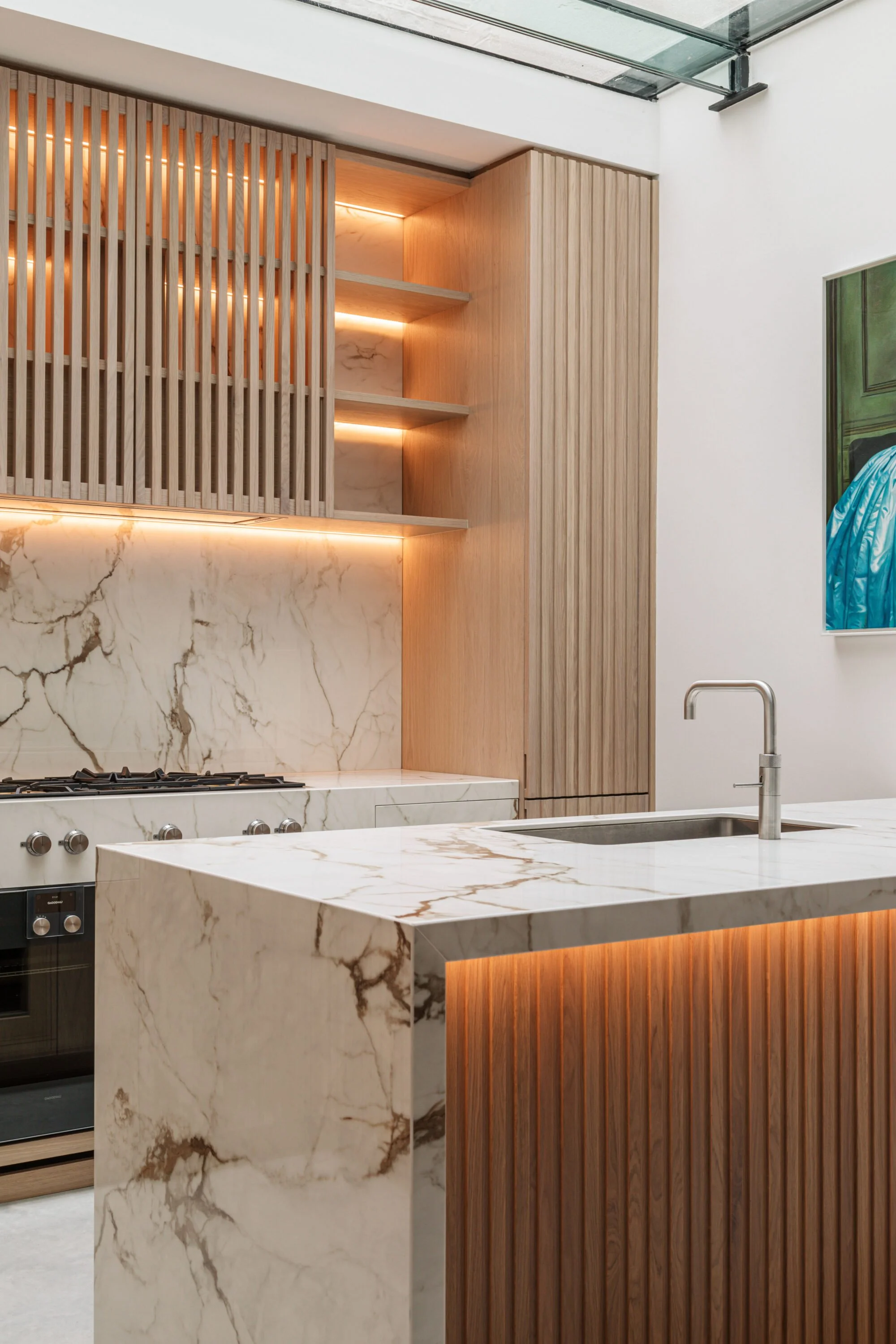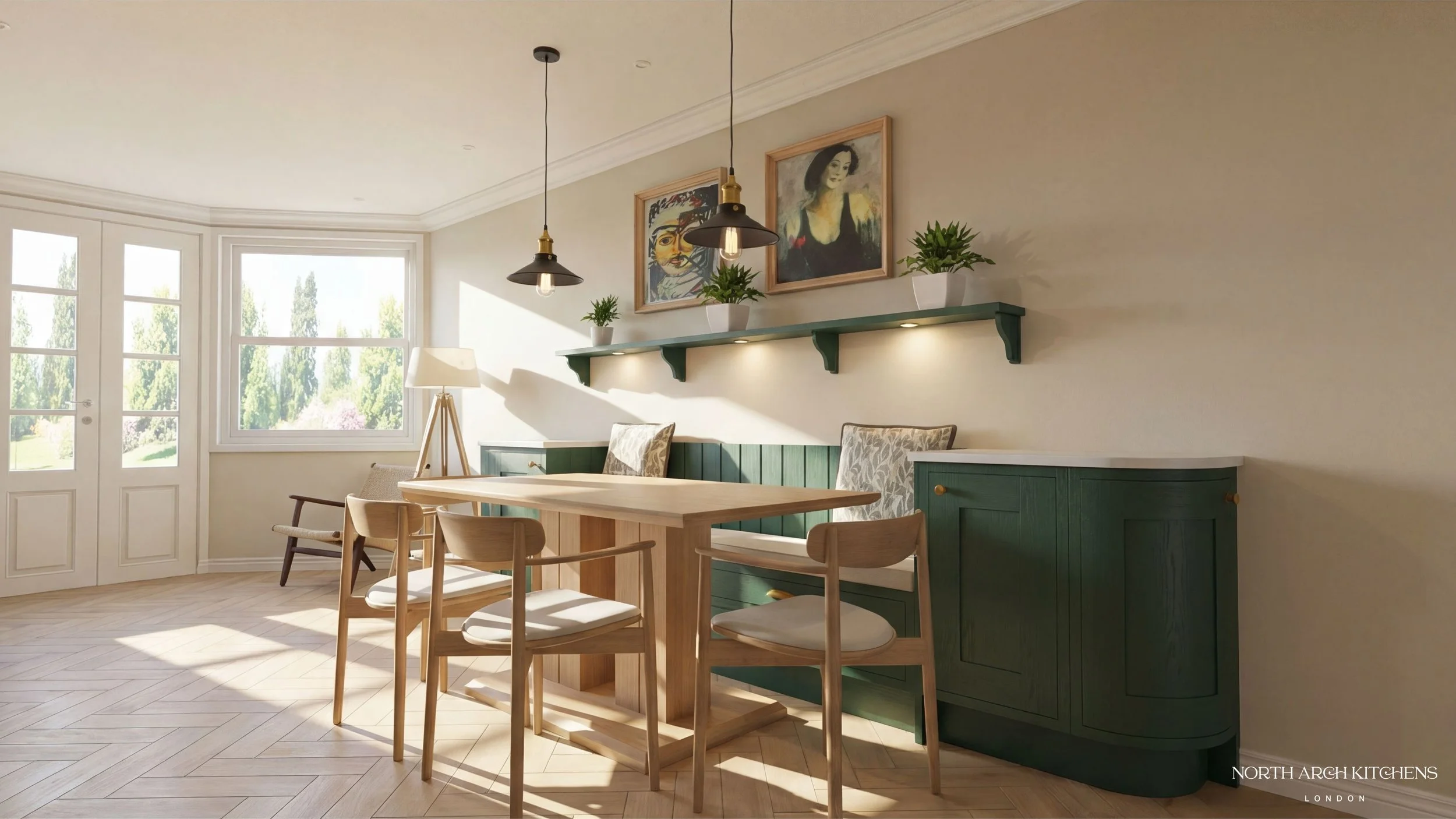
Luxury Bespoke Kitchens
Luxury Bespoke Kitchens That Bespeak British Craftsmanship
Type "luxury kitchen designers" into Google and every result reads the same: bespoke, luxury, quality, hand-built. The words are true often enough, but they tell you little about how a kitchen actually gets designed, built and fitted, or who answers the phone when a problem needs solving. Kitchen design should not require decoding a marketing glossary before you can compare one company with another. At North Arch Kitchens, we design and manage bespoke kitchens for homeowners across North London, working from our Muswell Hill showroom with a small team of experienced designers who put craft and proper care ahead of the sales pitch.
What separates a bespoke luxury kitchen designer from a marketing label
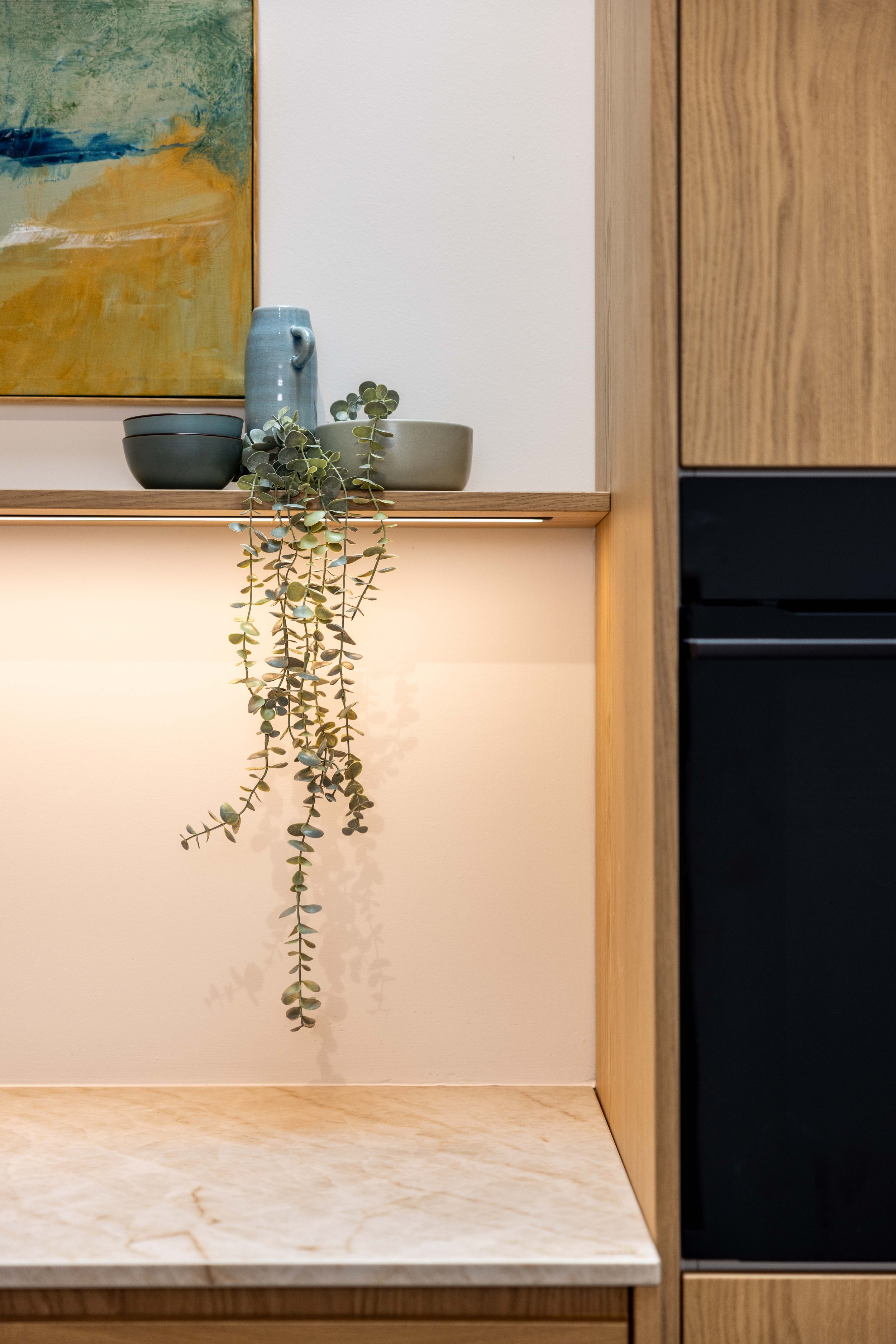
Most companies selling kitchens will tell you they care about quality. Fewer can show you what that actually means once you get past the website. A genuine specialist works to your specific requirements from the first sketch, not from a fixed range of cabinet widths you have to work around. That distinction sounds small until you are the one trying to fit a full run of units and still leave room to move into a galley kitchen in a Muswell Hill terrace, where every wall is slightly out of true and every centimetre matters.
We think the plain answer is that quality shows up in the decisions nobody photographs: the runner rated for daily use rather than showroom demonstrations, the finish chosen to match the light in your kitchen rather than a catalogue's colour chart, the extra half day spent scribing a unit to an uneven wall instead of leaving a gap and calling it finished. Expert guidance at this stage saves you from decisions you would otherwise only regret once the kitchen is fitted and impossible to change cheaply. Small things compound. There is no single perfect kitchen, only the right one for your household, and that comes from a design that bespeaks real attention rather than a template with your name on it.
You will hear bespoke used loosely across the industry, sometimes to describe properly made-to-measure work and sometimes to describe a standard carcass with a choice of door colour. We would rather you knew the difference before you commission a kitchen than after. A design that has to tailor itself around off-the-shelf parts is not really bespoke, whatever the brochure says.
Quality in the detail, from build to final finish
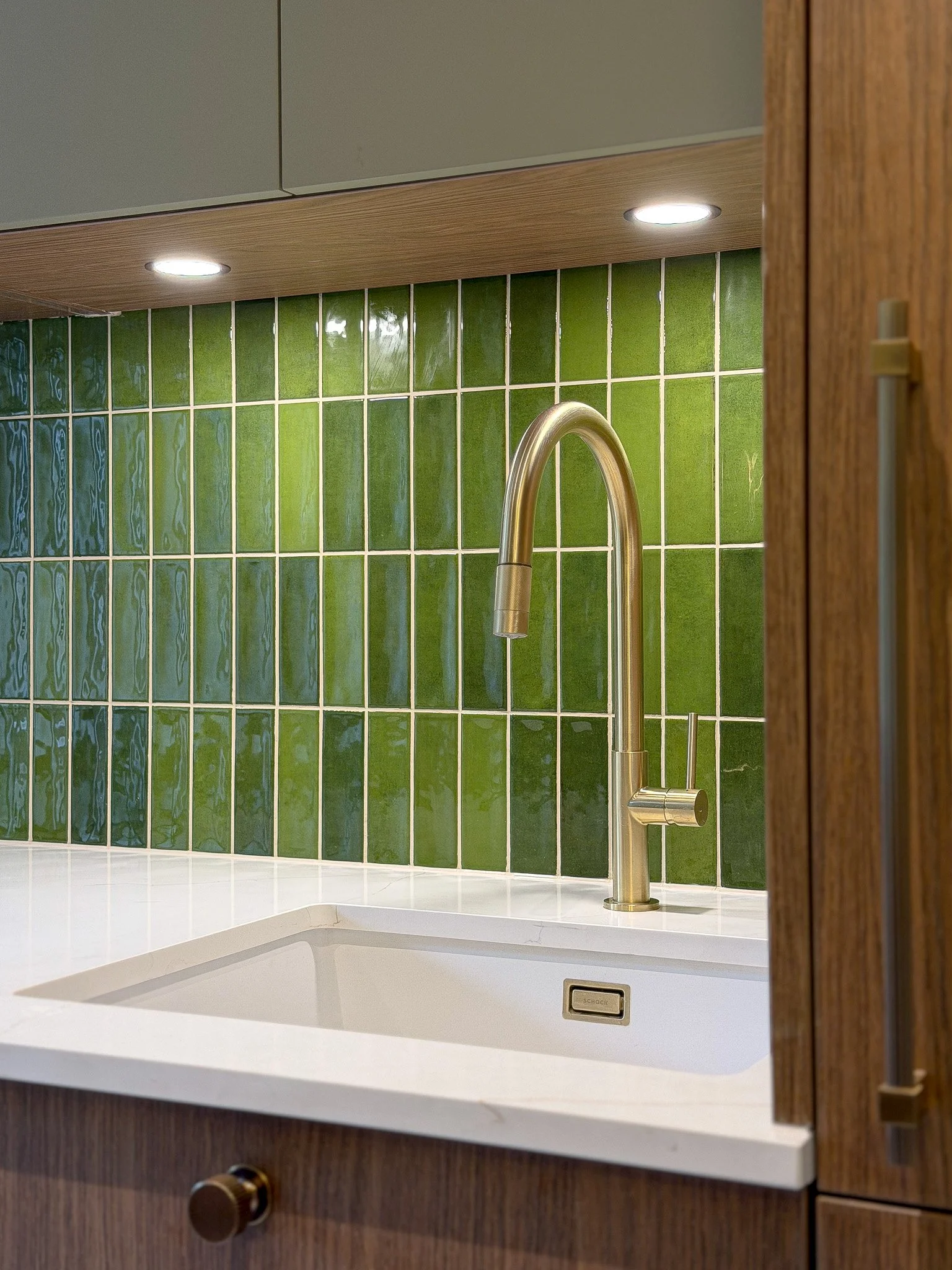
A kitchen carries more daily wear than almost any other room in the house, so the parts nobody sees matter as much as the parts everyone does. We build in-frame where the design calls for it, so the door sits proud of the carcass rather than covering it, and that single decision changes how every door will look and feel for years. Doors and drawers are hand-finished before fitting rather than after, which is slower but leaves a cleaner edge once the kitchen is installed, and a good fitter will still take the same care getting the join right on site.
Each kitchen we design draws on the same standard: using the finest materials we can justify for the job, from solid timber fronts to worktops chosen for how they will actually perform around a hob rather than how they photograph. A hand-painted finish takes longer to cure properly than a sprayed one, and we would rather tell you that upfront than rush hand-crafted finishing touches you will be looking at every morning for the next fifteen years. According to the Heritage Crafts Association, bespoke joinery is defined by custom fit and design that makes the most of available space, and the trade currently faces a genuine shortage of trained joiners as experienced hands reach retirement age faster than apprenticeships can replace them. We ask them to handcraft rather than machine-finish wherever the design allows. That is one reason we work with a small circle of trusted makers, the kind of unwavering commitment to quality craftsmanship a spreadsheet cannot fake.
None of this is cutting-edge in the way a new gadget might be. It is closer to a form and function argument that has held up for a couple of centuries: build it properly once, in solid materials, and it lasts. We think that argument still bespeaks more confidence than anything state-of-the-art dressed up as innovation, and every joint that holds firm after a decade of daily use is proof enough of the craft behind it.
British design heritage, and where it meets Muswell Hill
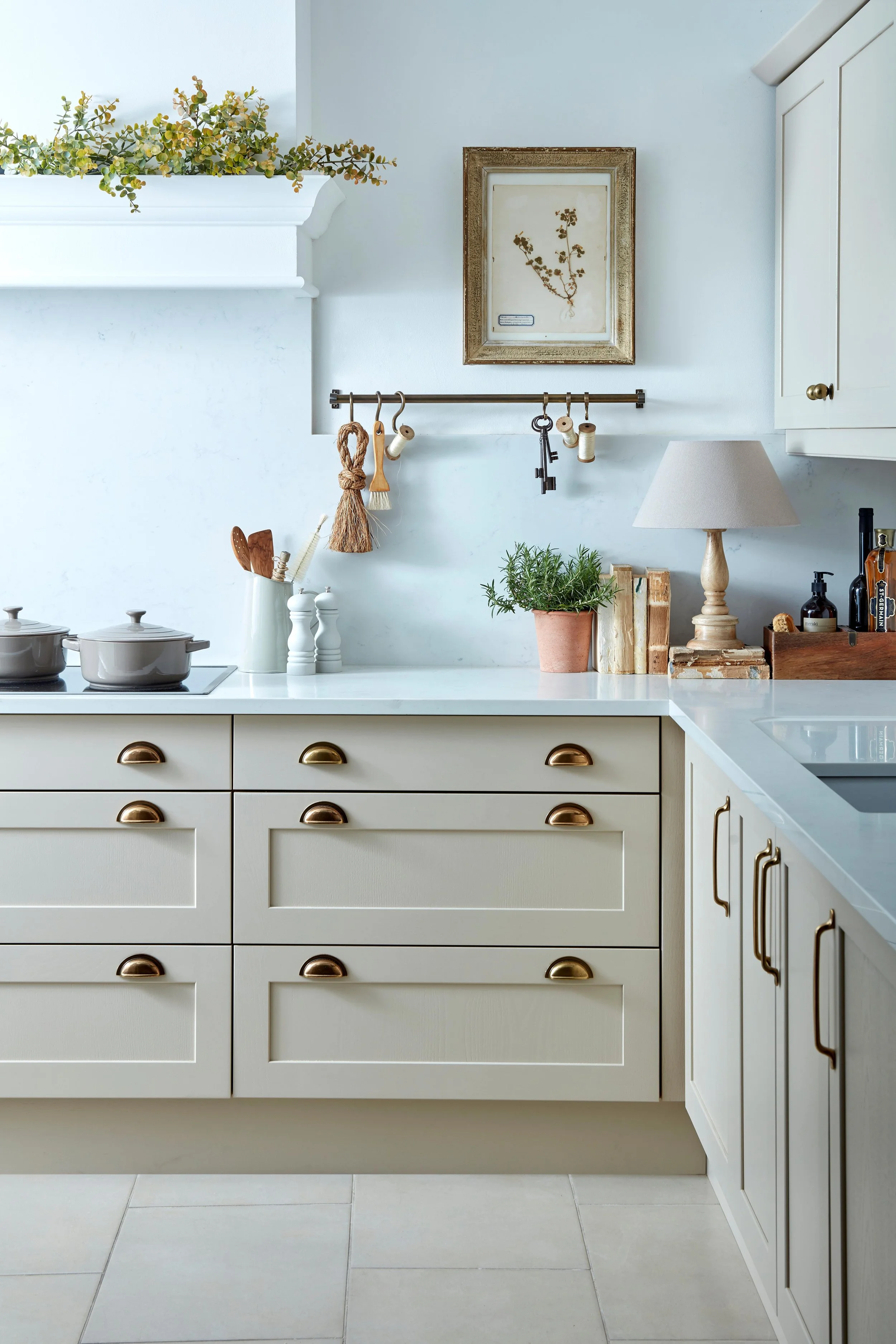
Tom Howley and Smallbone have shaped what British buyers expect from a kitchen at this level, and the founder of the latter has spent more than forty years designing kitchens and is still working today, which says something about how long real expertise actually takes to build. What we take from that heritage is less about a single look and more about a standard: proper units, considered proportions and a design that respects the age of the house it sits in, with a sophistication that comes from restraint rather than decoration. Visit our showroom in Muswell Hill and you will see the classic shaker style sitting alongside more contemporary, shaker-inspired fronts, a pairing that bespeaks confidence rather than trend-chasing, because a single interior rarely suits every property we work on.
North London is full of Edwardian and Tudor-influenced houses and narrow Victorian townhouse kitchens, and each one asks something different of a design. A tall, light period room can take a bolder colour palette than a low-ceilinged Victorian galley, where pale units and glass fronts do more to open the space up. A walk-in pantry built into an awkward understairs corner, tailored storage between joists that would otherwise be dead space, or a single elegant larder where more storage will not otherwise fit: these storage solutions matter more than style in older houses. The Victorian Society notes that many period kitchens once relied on a separate scullery for washing and food preparation, a room most of today's homes have long since lost, which is part of why a well-planned storage room has quietly become one of the most requested features in a period kitchen renovation.
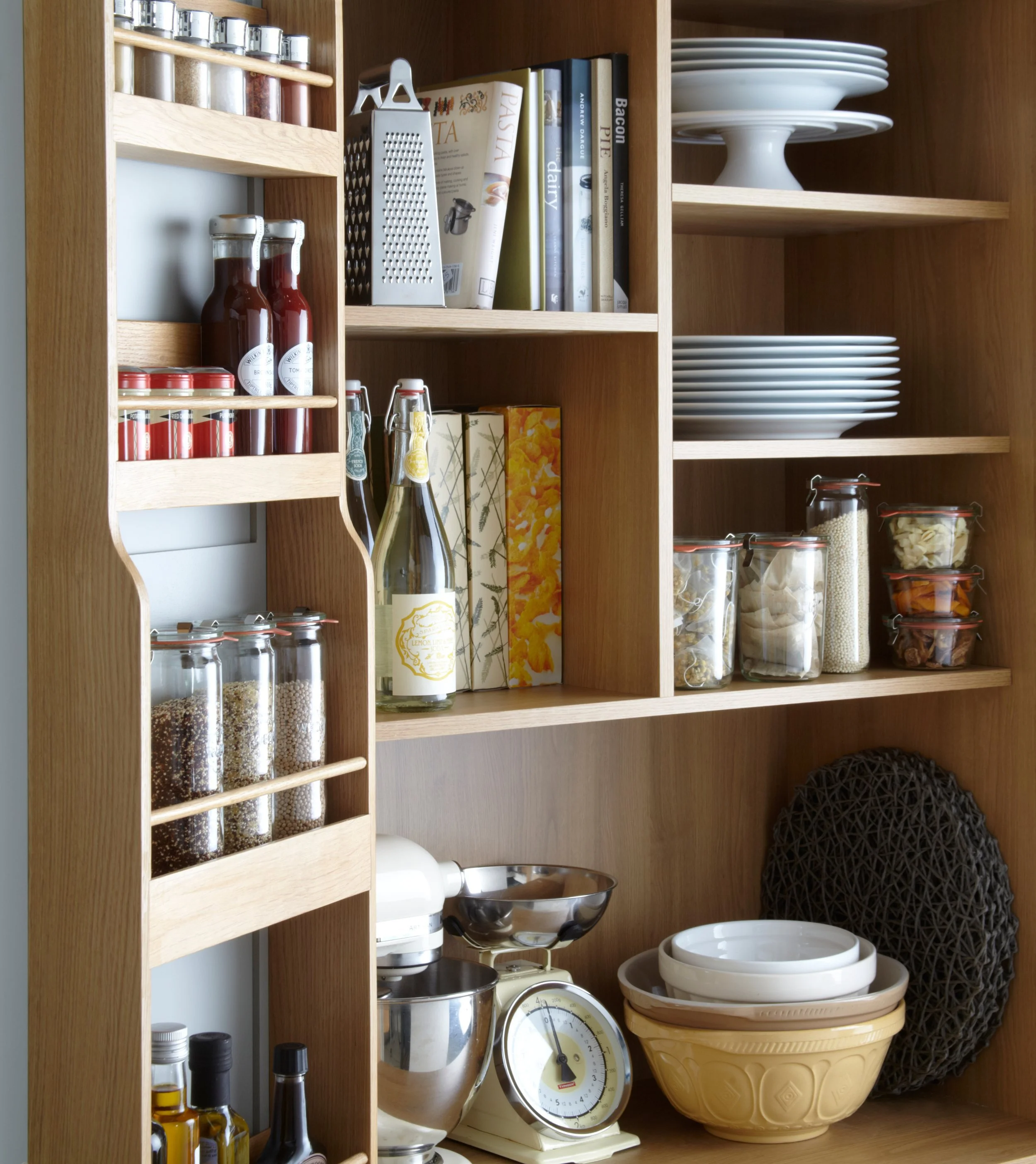
Interiors deserve the same attention as the doors in front of them. Soft-close boxes, a dedicated appliance housing and a proper spice pull-out all cost more to specify than to skip, and they are usually the things homeowners notice missing rather than present. Timeless does not mean plain: it means an elegance that does not shout, a kitchen that will not look dated in a decade. Trends fade. Detail does not.
From first conversation to installation
Every kitchen project starts the same way regardless of budget: a conversation about how you actually use the space, not a quote. Our design process runs through initial consultation, layout planning, supplier coordination and a full specification before anything is ordered, and we walk you through each stage rather than disappearing between meetings. It is a slower start than picking a kitchen off a shelf, and it is the reason the entire process tends to run with fewer surprises once installation begins.
We coordinate directly with our approved installers throughout, and the same team that designed your new kitchen manages it start to finish, so you are not passed between departments when something needs a decision. A trusted craftsman matters as much as a trusted designer: the best cabinetry in the world still needs to go in level, scribed properly and finished without shortcuts, fitted by master craftsmen who treat the last day of a job as carefully as the first. Kitchen projects vary enormously in scope, from a compact galley refit to a full open-plan rebuild, but the standard of project management should not, and every detail along the way is checked before we sign it off.
The goal, plainly, is to create beautiful kitchens that bring your vision to life rather than a version of it you had to compromise on, kitchens crafted with the same care whether the room is six square metres or twenty six. We would call it a pleasure to deal with a company that tells you the truth about lead times and budget at the first meeting rather than the third, so that is what we try to be. Truly bespoke work takes longer than off-the-shelf, and we think that trade is worth making for a kitchen you will use every single day, one that will feel considered underfoot and under hand for years to come.
Book a design conversation
If you want to create your dream kitchen rather than settle for the nearest approximation, the next step is simple: visit our showroom, or book a consultation and talk us through the house, the household and how you actually cook. We are not going to promise a fixed price before we understand the scope, because every properly bespoke kitchen earns its price through the decisions made along the way, not a number picked to win the enquiry. What we can promise is a team that will elevate the ordinary parts of a project into something considered, high-end where it matters and sensible everywhere else, so the whole process runs seamlessly from that first conversation to the day you are cooking in it. Ready to transform your kitchen? Start with a design conversation, and you will see soon enough why we think a home built on handmade furniture and straightforward work still bespeaks more than any brochure ever could.