Best Shaker Kitchen Ideas
A Modern Shaker Kitchen Starts With the Cabinet
A good Shaker kitchen is decided at the cabinet door, long before anyone opens a paint chart. What separates a room that still feels right in fifteen years from one that dates in five is mostly hidden from view: the width of the rails and stiles, and the material behind the paint. Get those two right and almost any colour will work. Get them wrong and no paint will rescue the room.
We design Shaker kitchens for homes across North London, from Edwardian terraces to glazed rear extensions, and the same handful of decisions shapes almost every project. These are the ones that matter, in the order we weigh them.
The 5-piece cabinet door is where Shaker design starts
The Shakers began around Manchester as a small group that had broken away from the Quakers, and their leader, Ann Lee, arrived in New York with eight followers in 1774. The communities they founded went on to make their own furniture and fittings with almost no ornament, judging each piece by how well it was made and how well it worked. You can see that attitude in the plain peg rails they ran around their rooms: one Hancock example in the Shaker Museum collection, dated to between 1800 and 1825, is simply a beaded board fitted with turned cherry pegs. Their craftsmanship was practical first.
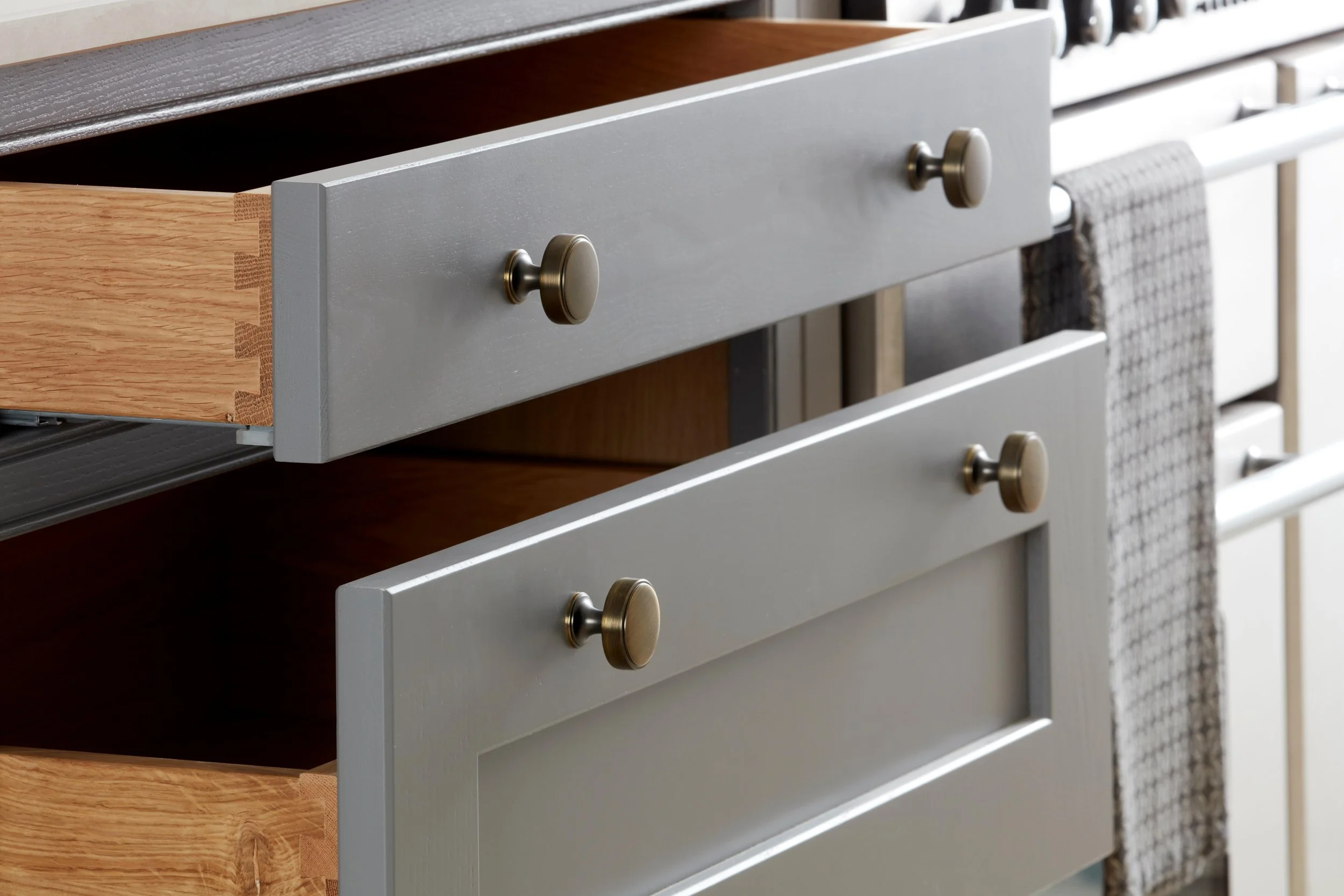
The cabinet door that carries their name follows the same thinking. A traditional five-piece door uses two upright stiles and two horizontal rails, with a flat centre panel held in a groove between them so it sits back in a shallow recess. That is the whole idea. Nothing else is needed to make a door Shaker, which is why the proportion of those five parts carries so much weight.
We think the rails and stiles should read as equal in width on every door, so the panels form calm rectangles with balanced proportions from a tall larder cupboard down to the shallowest drawer front. If the border narrows on wide doors or thickens on drawers, the run looks slightly off even when you can't say why. Good kitchen design catches that early. Our design phase, usually two to three weeks, is where those borders are planned across every wall before anything is ordered.
Solid wood or painted board: the craftsmanship behind the door
A Shaker door can be built in solid timber throughout, as a hardwood surround holding an engineered panel, or as a single sheet of MDF routed to replicate the five pieces. Each has its place. The one-piece version is stable and usually the least expensive, though its routed profile tends to look softer up close than a jointed door.
A door made entirely of wood is not automatically the better choice once it is painted. Wood moves as humidity rises and falls, and a timber panel that shrinks in a dry, centrally heated January can open a fine line in the paint where it meets the surround. An engineered panel stays put, which is why many well-made painted doors pair a hardwood surround with a board panel. Natural wood is a different case: on an oiled or lacquered door the woodgrain is the whole point, and seasonal movement is far harder to spot.
Wood is also back in fashion. Houzz's 2026 survey of US kitchen renovations found wood had overtaken white as the most popular cabinet colour, at 29% against 28%. Oak wood cabinets on an island or a run of tall housings are an easy way to bring that warmth into a painted scheme. Traditional in-frame construction, where each door sits flush inside a fixed surround, gives a more furniture-like result still. It costs more and gives up a little internal width, so it suits rooms where that look matters most.

Traditional Shaker kitchen or contemporary Shaker: how they compare
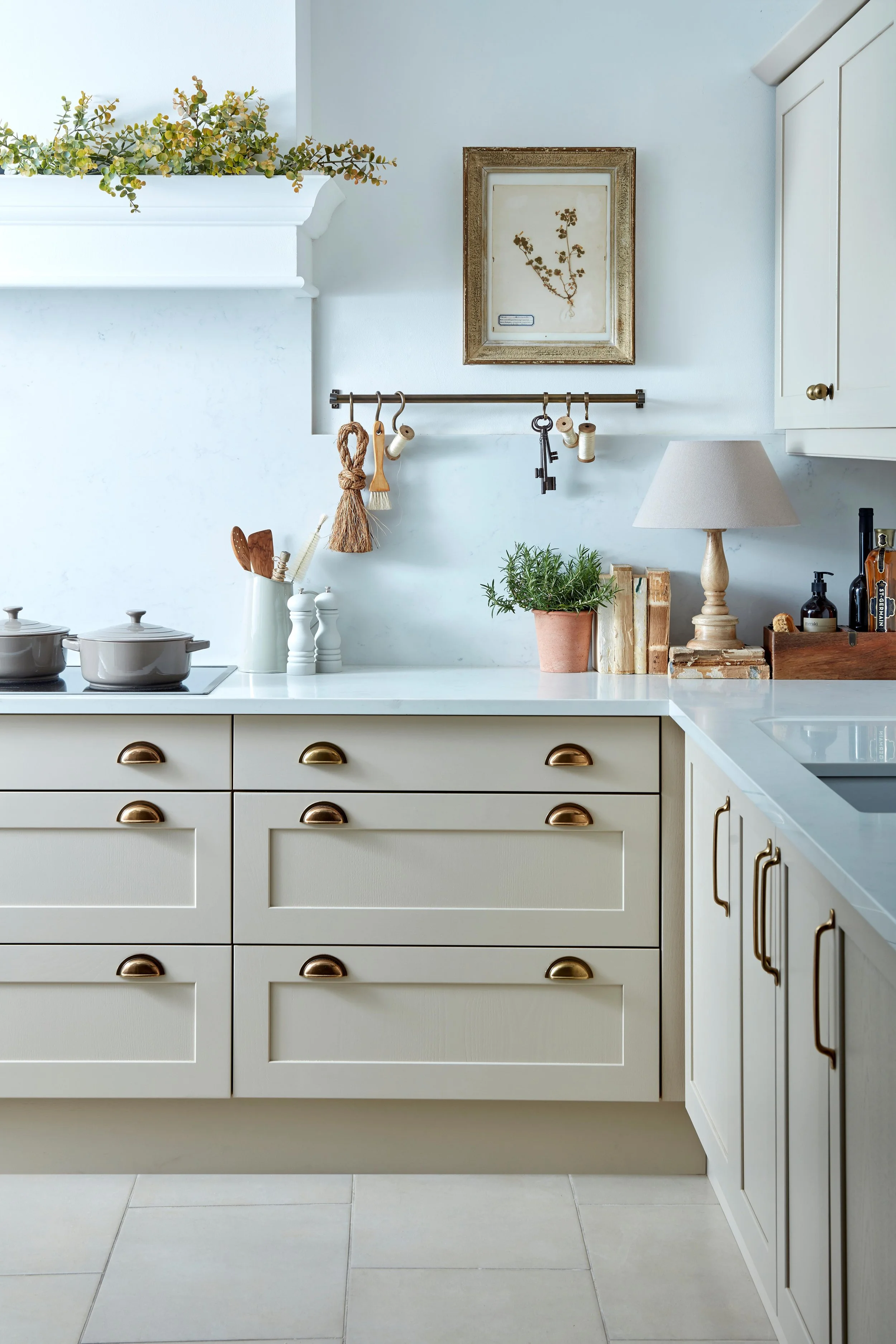
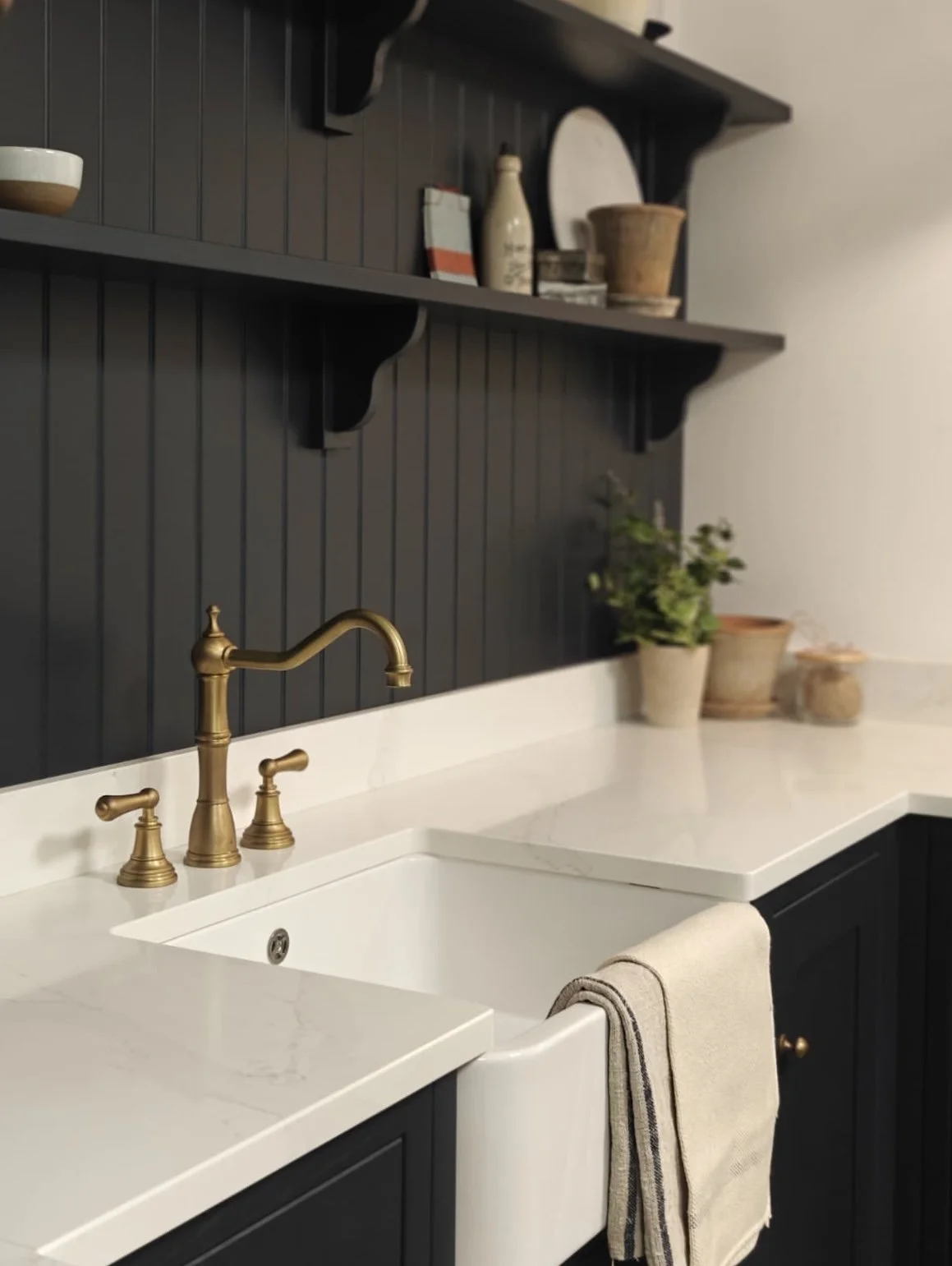
The traditional version leans on the details most people picture when they think of the classic Shaker style: doors set within a surround and knobs or cup handles in brass or iron, often with a Belfast sink and a plate rack above it. It suits a country kitchen in a period house, and it can go further toward a farmhouse feel with tongue-and-groove panelling and rustic oak shelving. Done well, it is a traditional kitchen in the fullest sense, yet it rarely feels like a museum piece.
The contemporary version keeps the clean lines and strips almost everything else back. Rails and stiles get slimmer, sometimes down to a narrow frame that reads almost as an outline, and the inner edge is left square or bevelled instead of beaded. Handles shrink to slim bars or disappear altogether. Mixing those doors with a slab island gives a modern twist that sits comfortably in a contemporary space such as a glazed rear extension.
There is a catch. Shaker-style doors led the same survey at 58%, yet Woodworking Network notes that some manufacturers achieve the fashionable slim version with little more than applied mouldings. A properly jointed door bespeaks care in a way a stuck-on moulding never will, and the difference can show at the corners once a door has been opened a few thousand times. That matters most at the minimalist end of the range, where nothing distracts the eye from how the door is made.
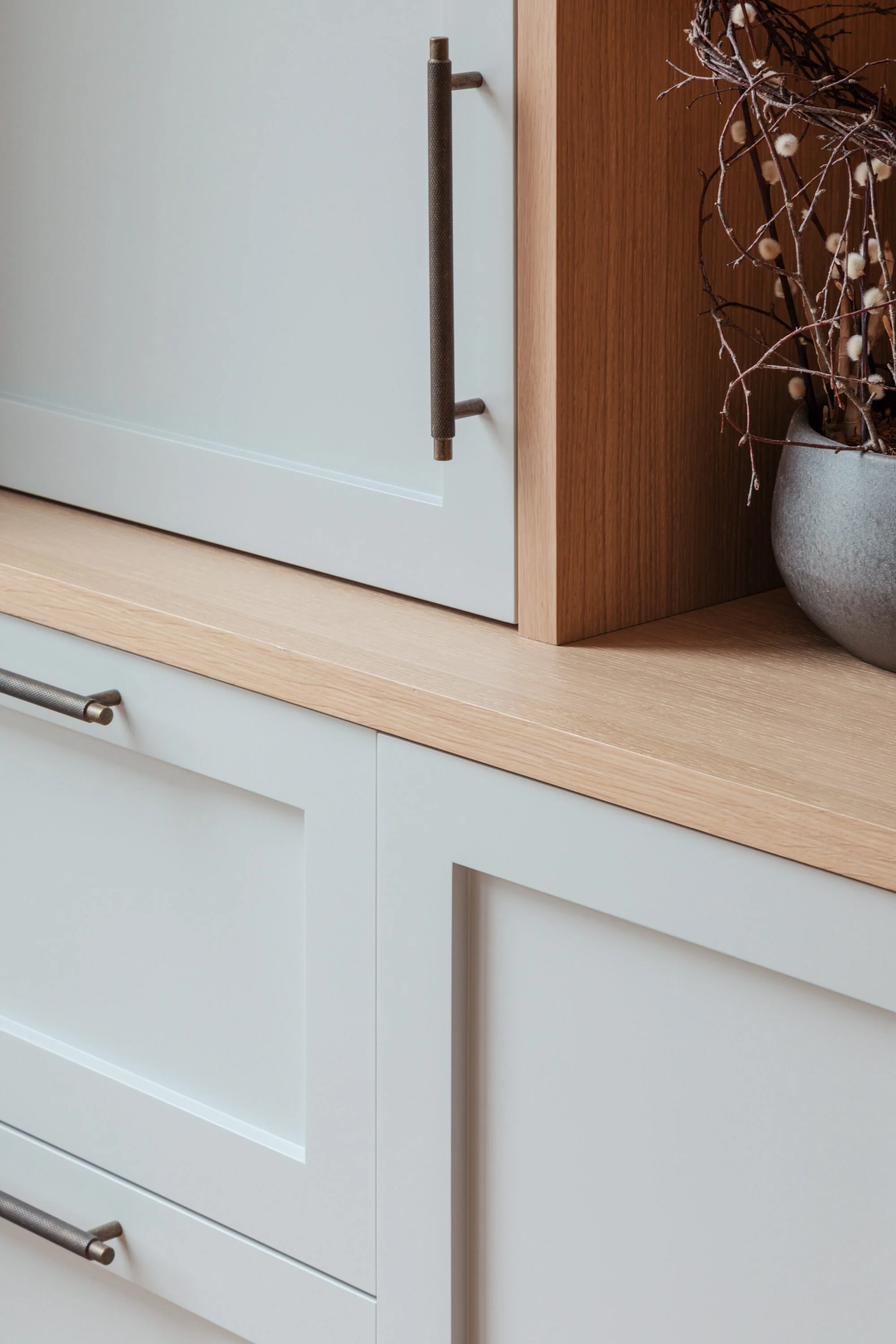
Why a sage green kitchen suits Shaker cabinetry
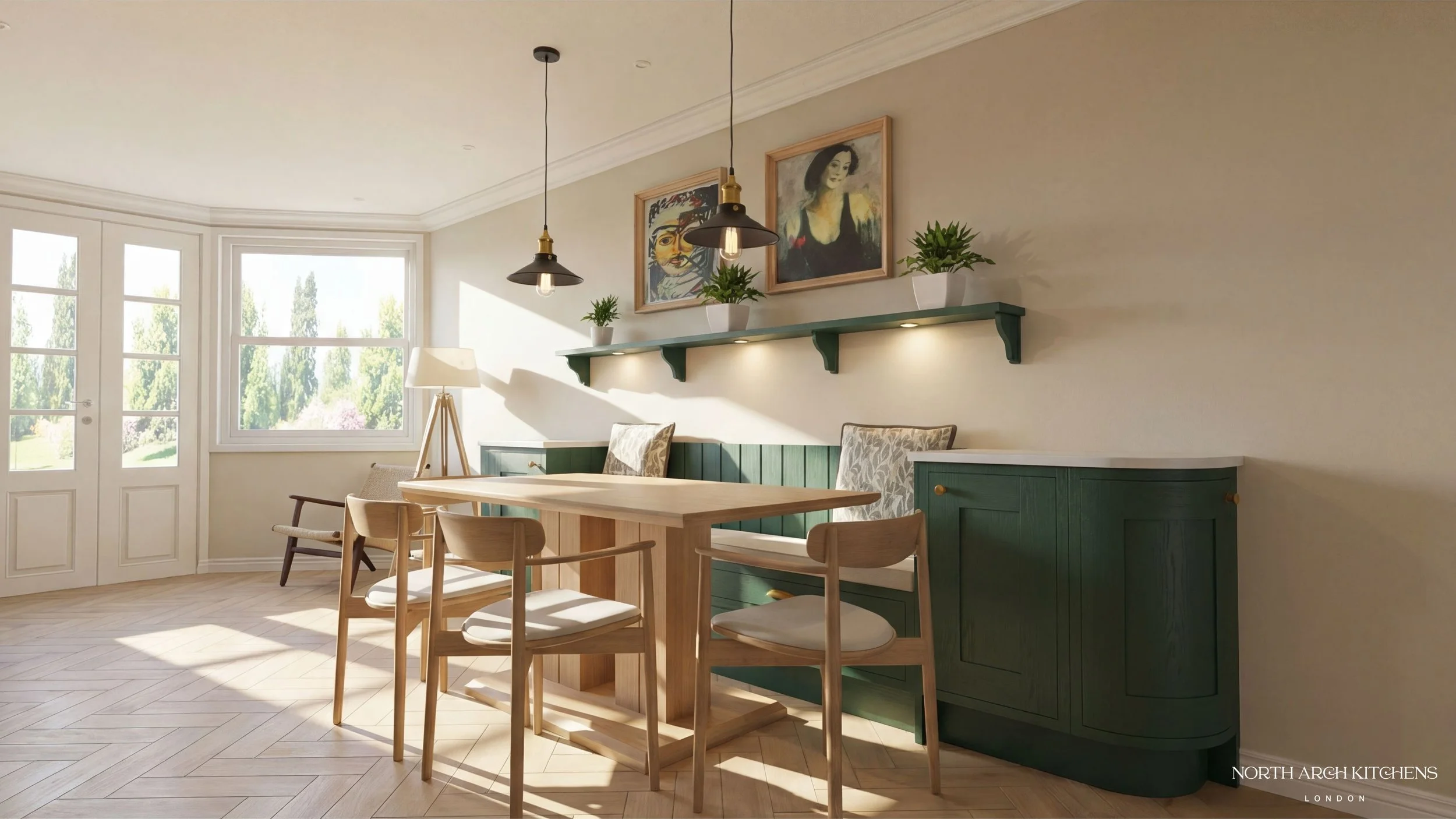
Muted greens have become one of the colours most closely tied to the look, and the reasons are practical as well as fashionable. A grey-green reads warmer than grey and softer than navy, and it holds its tone in a north-facing room where pure white can turn flat and slightly blue. It also sits easily beside natural materials such as oak and stone, which is why it works in period and new-build homes alike.
Painted finishes are where budgets diverge most. A factory-sprayed finish is even and hard-wearing, while a hand-painted door can be repainted in place years later, which suits anyone who expects to change their mind. Light changes everything. Photographs tend to understate how much a painted door shifts between morning and evening, so look at samples in your own room, at both times of day, before you commit.
Two-tone schemes are worth considering too: a darker base run with paler wall units keeps the room bright while grounding it. Whichever colour you choose, tie it to the interior beyond the kitchen, especially in an open-plan room where the cabinets stay in view from the sofa.
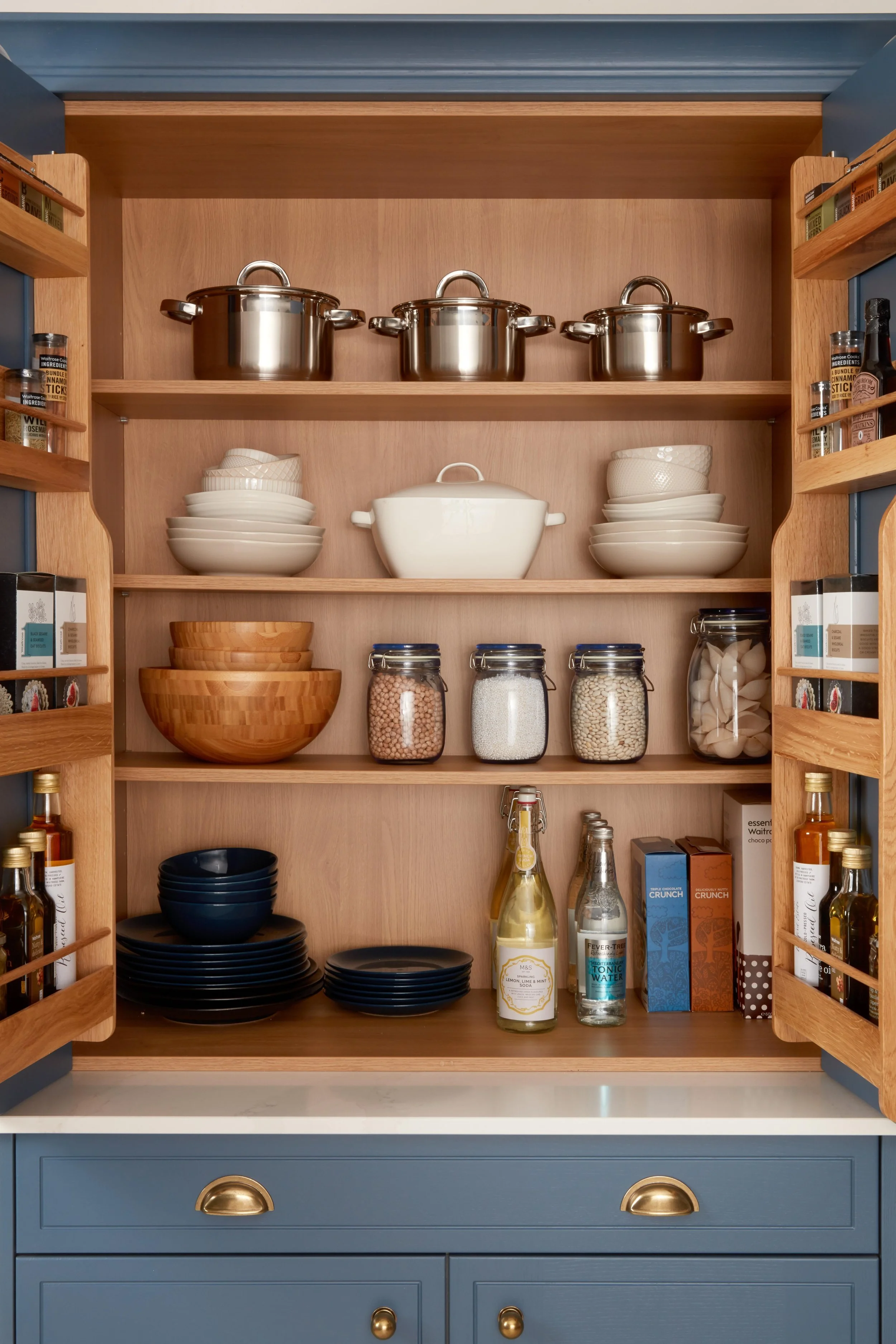
Details that make a fitted kitchen feel considered
The doors set the tone, but the worktops decide whether a Shaker room feels period or current. Oak or marble suits the traditional version, while a slim quartz or a leathered granite looks right with pared-back doors, and either will complement a painted finish if you sample them together. Edge thickness matters as much as material, since a chunky edge reads as traditional and a thin one reads as current.
Hardware is the quickest way to shift the mood. Knobs and cup handles pull a room toward a traditional style, while long bar handles streamline it. Pick one metal throughout. A painted plate rack or a short run of open shelving can add character to a plain wall, and it is a stylish way to use a gap too narrow for a full unit.
The floor and the layout need the same care. Plain stone or terracotta tiles suit the traditional version, while wide oak boards can run on into a dining space. Shaker doors work with almost any plan, from a galley to an island, provided door sizes are worked out so the borders stay aligned along each run. This is where stock sizes cause trouble: a range made only in fixed widths often leaves filler panels at the ends of runs, and those strips break the rhythm the whole room depends on.
Our recommendation: a timeless design built to endure
For anyone planning a kitchen in this style, our advice is to spend on construction and spacing first, and to treat paint and hardware as the parts you can change later. Whichever kitchen style you lean toward, a timeless kitchen is rarely the one with the most features; it is the one where nothing looks like an afterthought. That is the enduring appeal of the Shaker idea: it rewards care. Shortcuts always show.
Collecting design ideas is the easy part, and you don't need a designer kitchen budget to get the fundamentals right. The versatility shows in how the same door sits in a Victorian terrace or a new-build flat with only the paint and handles changed. There is an elegance in a plain painted door that heavily decorated kitchens struggle to match. Two centuries on, it is still a classic design, and still a versatile design that adapts to the house around it. Durability comes down to the joinery and the paint system, so ask about both before you compare prices.
Our projects follow a clear process: an initial consultation, design and detailed specification, then installation by approved installers, with one accountable team from first conversation to handover. Small kitchens start from £20,000, and the final figure depends on the design, door range, appliances and work surfaces, which is why we don't fix a price before the specification is complete. Visit our showroom in Muswell Hill to see painted doors and oiled oak side by side, or book a consultation and start with a design conversation.